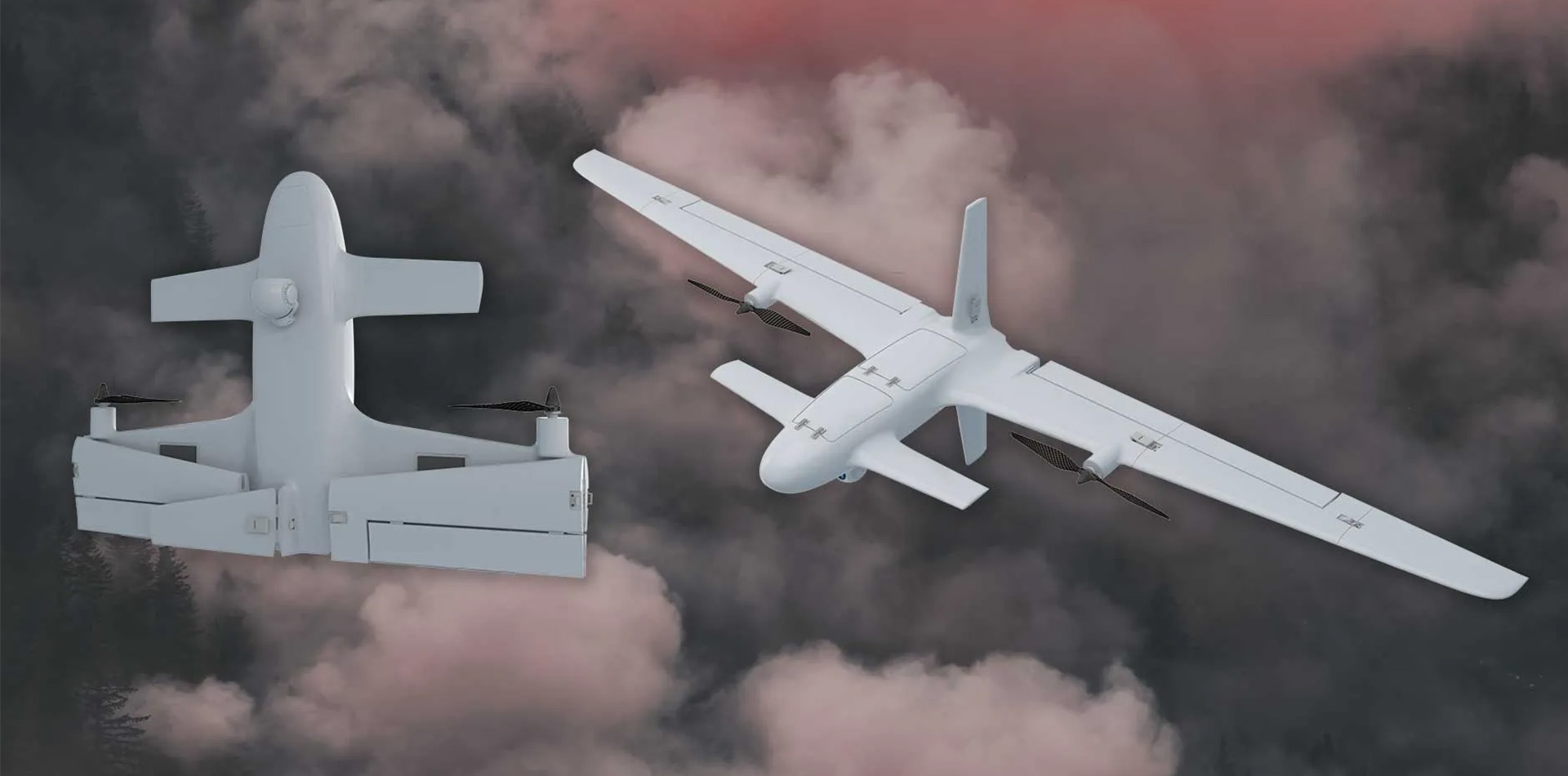
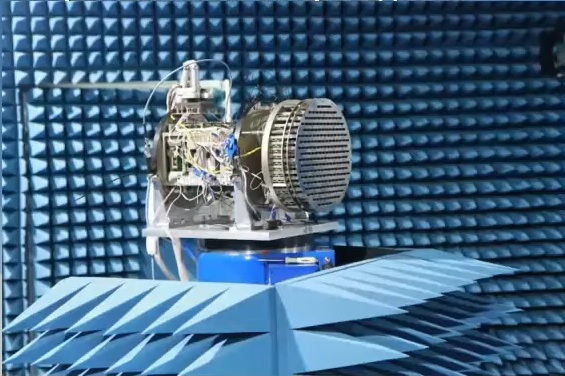
AESA Seeker Technology: Transforming Guidance in Modern Loitering Munitions Amid Contested Environments
 author
 - 26th February 2026
Active electronically scanned array seeker technology, or AESA seeker, continues to gain traction in precision-guided systems, especially among loitering munitions tasked with operating inside heavily jammed and contested electromagnetic spaces. These seekers transmit radar signals actively while steering beams electronically to hit detection ranges past 5 km, deliver guidance accuracy tighter than 0.5 m CEP, and hold performance steady against broad-spectrum jamming, weather degradation, and deliberate countermeasures. Recent operational data from high-intensity theaters keeps showing how infrared imaging seekers and semi-active laser seekers degrade sharply when layered electronic warfare kicks in, smoke screens deploy, thermal decoys activate, or navigation signals get denied outright. AESA seekers mitigate those exact pain points through standalone target acquisition, concurrent multi-target tracking, and dependable all-weather function that skips external designators and clear atmospheric windows.
The movement stems from hard-learned realities on the ground rather than lab projections. Units fielding loitering munitions now deal routinely with saturated air defense layers that include GPS spoofing, data-link cuts, and fast-reacting electronic countermeasures. AESA technology opens a viable route by backing autonomous search patterns, lock maintenance, and standoff engagement, all while keeping the launch asset farther from threat reach and preserving overall mission viability.
Why Traditional Seekers Struggle in Today’s Electromagnetic Battlespace
Older guidance approaches expose predictable weak spots once modern contestation ramps up.
Infrared imaging seekers work by passively gathering thermal radiation emitted from targets. They provide reliable autonomy under clear skies or at night, with inherent fire-and-forget behavior and sharp imaging detail that helps differentiate vehicle outlines or building elements. Still, thick overcast, intense rain, dense fog, or intentional flare deployment, exhaust masking, and heated decoy arrays cut terminal success rates—frequently dropping hit probabilities under 40% whenever jamming or countermeasure saturation occurs. Practical detection stays restricted to roughly 1–3 km, which limits true standoff flexibility.
Semi-active laser guidance achieves tight precision, commonly landing below 1 m CEP by following reflected laser energy bounced from a designator. It manages stationary or low-speed targets well and builds in moderate resistance to simple electronic interference through pulse coding. The absolute reliance on unbroken external illumination, though, puts the designating platform in the crosshairs. Smoke curtains, dust clouds, rainfall, snowfall, or other battlefield obscurants diffuse the beam path, weakening all-weather reliability and removing any built-in target classification ability.
Both families have carried weight in lower-threat missions, but real contested airspace lays bare their shared vulnerabilities: heavy exposure to environmental factors, active countermeasures, and collapse of supporting external cues.
Core Advantages of AESA Seekers Over Infrared and Semi-Active Laser Methods
AESA seekers rely on active radar transmission paired with phased-array electronic scanning that eliminates mechanical parts. That basic shift generates several clear operational gains.
Detection stretches reliably beyond 5 km in practical setups, opening engagements from beyond visual range and cutting risk to the launching asset. Instantaneous beam repositioning supports quick acquisition loops and parallel tracking of multiple targets—often dozens at once in mature designs. Multi-target engagement capacity turns critical during saturation attacks or amid heavy decoy clutter.
Precision guidance consistently reaches sub-0.5 m CEP, equaling or beating semi-active laser results while showing far less variation across changing conditions. All-weather capability emerges as a dominant strength: radar energy pushes through rain, fog, dust layers, and light-to-moderate smoke much more consistently than infrared wavelengths or laser propagation paths. Targets featuring reduced radar cross-sections stay trackable at usable standoff distances owing to strong transmit power and flexible waveform options.
Anti-jamming strength comes from rapid frequency changes, waveform variety, and low-probability-of-intercept features that make enemy detection or disruption far harder. Infrared seekers lose lock easily to heat countermeasures, semi-active laser systems break when illumination gets interrupted—AESA seekers counter through adaptive beam control and sophisticated signal handling to keep the engagement alive.
In fully GPS-denied zones, blending with inertial references, visual inputs, or terrain matching extends operational window further. Solid-state transceiver designs help keep power draw in check, although thermal management and overall complexity still factor into smaller airframe integrations.
Direct side-by-side distinctions clarify the picture:
- Guidance principle: infrared imaging uses passive thermal collection; semi-active laser follows reflected external energy; AESA processes active radar echoes via electronic scanning.
- Range: infrared typically 1–3 km; semi-active laser under 3 km; AESA exceeds 5 km.
- Accuracy: infrared 1–3 m; semi-active laser under 1 m; AESA under 0.5 m.
- Anti-jamming resilience: infrared susceptible to decoys; semi-active laser to obscurants; AESA holds through frequency agility.
- Weather tolerance: infrared and semi-active laser suffer in clouds, rain, smoke; AESA penetrates reliably.
- Multi-target support: limited for infrared and semi-active laser; robust for AESA.
These traits position AESA seekers particularly well against agile, low-signature, or electronically shielded threats across fluid operational areas.
Challenges in Bringing AESA Seekers to Loitering Munitions
Fitting AESA seekers into loitering munitions has run into longstanding practical barriers. Earlier versions needed heavy power budgets, dedicated cooling setups, and sizable physical apertures, making integration tough on platforms under 50 kg. Complexity drove acquisition costs high enough to restrict scale in smaller strike systems.
Ongoing advances in semiconductor materials—including gallium nitride elements—along with dense monolithic integration and modular array layouts have trimmed dimensions without sacrificing core performance. Efficient solid-state architectures cut energy requirements, allowing sustained operation on constrained battery capacity. Scaling production lines and borrowing from commercial-grade processes have started bringing expense down, carving realistic paths for AESA-derived sensing in compact munitions.
Such engineering steps make long-range, interference-resistant guidance feasible on platforms where signal independence provides major tactical payoff.
SKYPATH‘s Foldwing Series Loitering Munitions
SKYPATH builds mission-focused platforms tuned specifically for electronically contested operating zones. The Phantom Razor family covers ranges from tens of kilometers up to 200 km, prioritizing sub-meter navigation accuracy, AI-based target recognition above 99.9% reliability, and consistent behavior under heavy interference. Fiber optic gyroscope inertial navigation merges with visual-inertial fusion to supply guidance immune to jamming when satellite or link signals drop away. Multi-mode warheads handle varied effects—impact, proximity, or delayed—across different target classes, while tube-launch options and man-in-the-loop oversight increase tactical versatility.
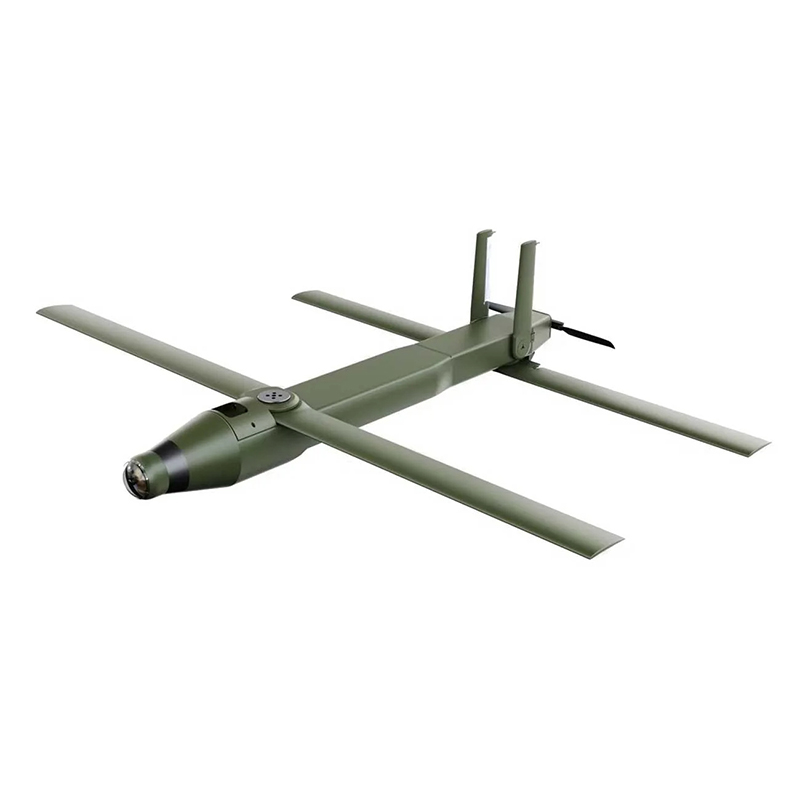
The Phantom Razor series represents a practical step toward integrating resilient guidance in compact, deployable platforms. While complete AESA implementation specifics stay protected for operational security, the core architecture supports multi-mode sensing trends that emphasize independence in GPS-denied and jammed settings.
SKYPATH: A Focused Provider of Unmanned Systems
SKYPATH delivers integrated unmanned solutions aligned with defense, government, and security mission sets. Headquartered in Singapore and manufacturing throughout Southeast Asia, the organization scales production of professional military drones and counter-UAS systems to monthly outputs of 1000 units. Engineering groups—staffed by PhD and master’s specialists—push forward in AI-assisted targeting, autonomous flight logic, precision guidance chains, and anti-interference techniques.
Key competencies include long-endurance autonomous navigation, sensor fusion for denied-signal environments, and reliable execution amid electromagnetic contestation. Offerings span reconnaissance VTOL platforms, heavy-payload transporters, and precision-strike munitions, each backed by extensive flight validation and worldwide field support. SkyPath concentrates on mission-critical dependability, compliance standards, and accelerated deployment to match evolving operational demands.
Conclusion
AESA seeker technology represents a substantive advance in guidance solutions for loitering munitions and related platforms. Greater detection reach, superior terminal accuracy, multi-target processing, and strong defenses against jamming and weather close longstanding gaps inherent to infrared imaging and semi-active laser guidance. With electronic warfare density rising across theaters, platforms that incorporate these elements establish measurable edges in acquisition consistency and strike reliability.
Sustained progress in miniaturization and cost reduction steadily widens access to AESA benefits for lighter, more maneuverable munitions. Those responsible for platform selection stand to benefit from careful assessment of these factors against concrete mission profiles—particularly where signal denial forms part of the baseline threat picture.
FAQs
What advantages do AESA seekers provide over infrared guidance in jammed or contested environments?
AESA seekers emit active radar signals and apply electronic scanning with frequency-hopping patterns to sustain detection and lock when jamming overwhelms passive infrared systems or saturates them with heat decoys. That built-in adaptability maintains effectiveness in GPS-denied zones and under electronic suppression where infrared seekers typically see steep declines in terminal performance.
How does AESA seeker detection range compare to semi-active laser in loitering munitions applications?
AESA seekers commonly extend detection beyond 5 km, surpassing the usual sub-3 km ceiling of semi-active laser guidance. Electronic beam steering supports fast, extended-range acquisition independent of external illumination, delivering improved standoff potential inside contested airspace.
Why does AESA technology deliver better all-weather performance than traditional infrared or semi-active laser seekers?
Radar propagation cuts through rain, fog, dust, and moderate smoke layers far more effectively than infrared signals that fade in clouds or precipitation, or laser beams that scatter under obscurants. This sustained penetration enables dependable terminal guidance across varied conditions, cutting abort risks in poor visibility or intentionally masked environments.
Can AESA seekers support multi-target tracking on compact loitering munitions platforms?
Electronic scanning permits simultaneous tracking of multiple targets with rapid beam steering. The approach allows flexible prioritization amid saturation attacks or dense clutter, outperforming the single-target limitation typical of infrared imaging and semi-active laser guidance.
What recent engineering progress has helped miniaturize AESA seekers for smaller munitions?
Refinements in solid-state components, gallium nitride materials, and monolithic integration techniques have shrunk physical footprint, reduced power draw, and eased thermal loads. Those incremental gains enable AESA-level capability on platforms below 50 kg, enhancing affordability and expanding integration options for emerging loitering munitions designs.

Main Products
Our Main Products
At SkyPath we develop cutting-edge drones for every situation. Please browse our products.
Contact Us
AUS70 Heavy-Duty Integrated C-UAS System
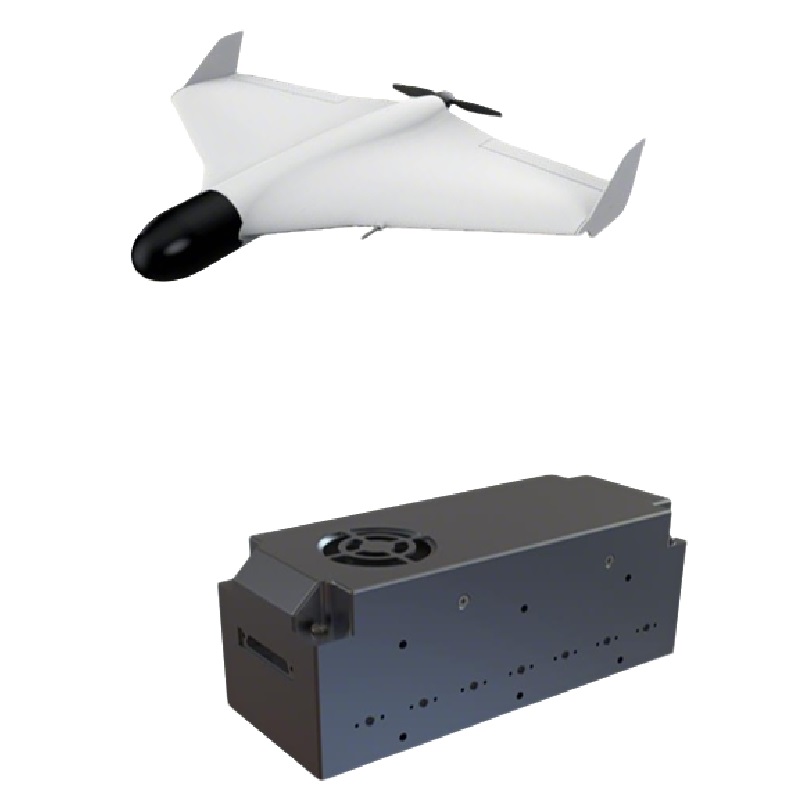
Anti-Drone Jammer Seeker
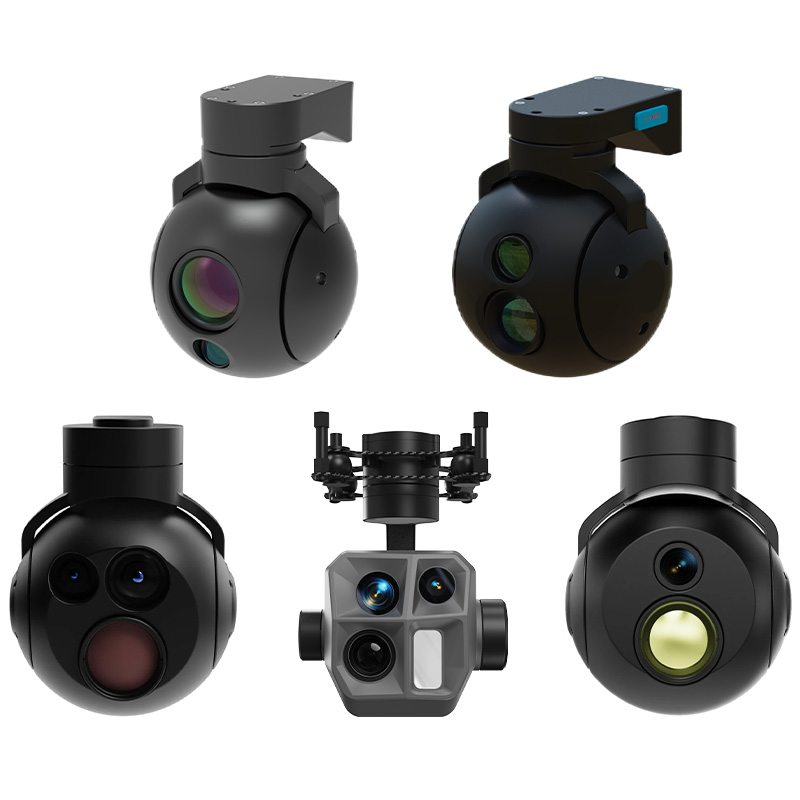
AD SERIES
Anti-jamming antenna AJ410
Anti-jamming antenna AJ440
Radar Absorbing Agents