
Countering Drone Threats at 2026 FIFA World Cup & America250: Key Lessons from DHS $115M Investment and Practical Non-Kinetic Solutions
 author
 - 6th March 2026
The 2026 FIFA World Cup spreads more than 100 matches across 11 U.S. host cities, pulling in millions of live spectators and billions of remote viewers, while America250 observances bring large-scale parades, public assemblies, and commemorative events nationwide. Department of Homeland Security moves show the level of concern: a new Program Executive Office for Unmanned Aircraft Systems and Counter-Unmanned Aircraft Systems steers targeted funding, with $115 million now committed specifically toward protecting World Cup venues and America250 locations. This amount follows FEMA’s quick $250 million grant distribution to the host states and National Capital Region, bringing total federal backing past $365 million through the Counter-Unmanned Aircraft Systems Grant Program. Resources concentrate on detection, identification, tracking, and mitigation of rogue drones, informed by patterns from Ukraine operations and various domestic airspace events.
High-profile gatherings carry clear risks from unauthorized UAS. One intruding platform can halt activities, gather intelligence, drop payloads, or trigger crowd panic near stadium boundaries. Kinetic methods—lasers, directed energy, or projectiles—create fragmentation or blast hazards in areas filled with people. Non-kinetic options that limit collateral effects and retain evidence for forensic review fit better with the safety standards required at major public events.
The Reality of Drone Threats During Major Events in 2026
Stadium setups at places like Mercedes-Benz Stadium or Lumen Field expose multiple weak points. Drones use city structures for cover, arrive from different directions, or hold position beyond visual line-of-sight. America250 parades and outdoor gatherings face similar exposure, made worse by the symbolic weight that can attract hostile intent.
Federal allocations tackle these conditions directly. The $115 million portion stresses solutions that avoid broad interference with civilian radios or public devices and prevent negative reactions from visible destruction. Airport and prison cases demonstrate that jamming frequently leaves drones in the air, drifting unpredictably and risking impact on people or buildings below. A complete sequence—early spectrum detection, focused suppression, and physical retrieval—cuts down on leftover dangers while keeping the platform intact for examination.
Lessons from DHS Investments: Moving Beyond Detection to Full Mitigation
FEMA pushed the $250 million out in only 25 days after closing applications, underlining the push for fast fielding. Grants emphasize sensor suites: radio frequency scanners, radar units, optical and thermal trackers. Mitigation still represents the main gap. Kinetic approaches work well in open areas but falter in stadium buffer zones where debris threatens bystanders.
Non-kinetic routes show clear value in populated settings. Spectrum monitoring identifies rogue drones and their operators at distance, often through heavy electromagnetic background. Directional jamming breaks GPS, video feeds, and control channels, leading to hover, controlled descent, or return-to-home without affecting wide areas. Physical capture follows to finalize the engagement, stopping any chance of reuse and allowing full evidence chain preservation.
Incident trends back this layered progression. Airport shutdowns happen when jammed drones continue floating; prison contraband persists until devices are recovered whole. In World Cup perimeter security or America250 route protection, integrated platforms shorten reaction times and ease demands on operators.
Layered Counter-UAS Frameworks for Stadium and Event Security
Solid airspace management at events depends on connected phases. Detection starts with spectrum analysis plus electro-optical and thermal sensors to spot unauthorized UAS against normal air traffic. Tracking holds position despite urban reflections and obstacles.
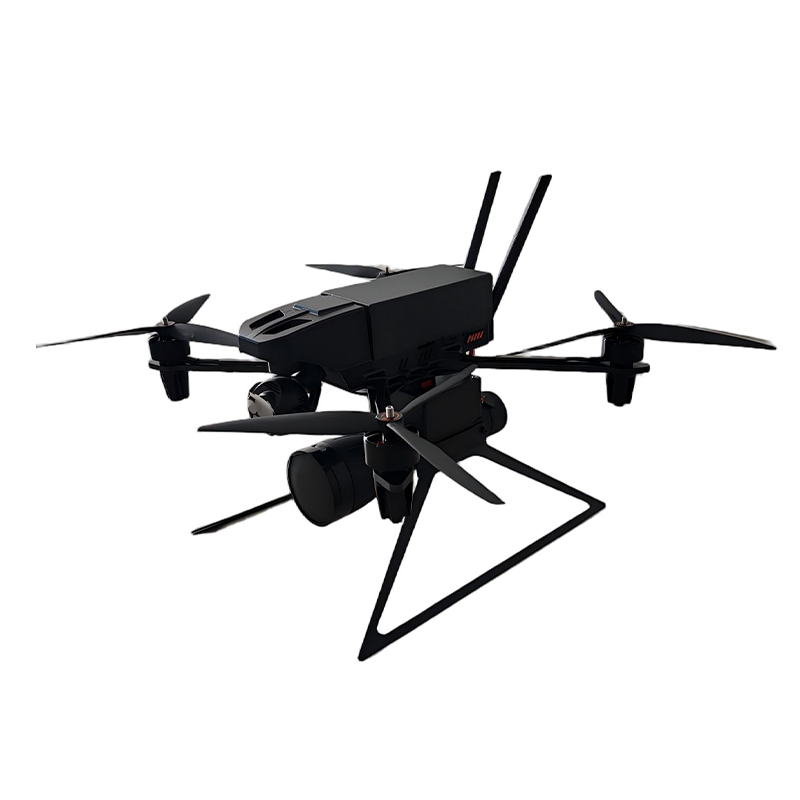
Mitigation comes next. Blanket jamming hits emergency frequencies or spectator phones; targeted interference after positive identification keeps the footprint small. When jamming removes control but the drone stays aloft, physical action closes the loop. Net capture at short range after accurate positioning achieves clean neutralization. A 3 m × 3 m woven net (15-mesh construction, 150 mm × 150 mm openings, rated for 17 kg load) surrounds the target fully, launched by gas cylinder from an ideal 8–10 meter standoff.
The detect-jam-capture process runs autonomously. Platforms carry high-resolution visible cameras (2880 × 1620 recorded output, 30× digital zoom) and thermal imagers (640 × 512 resolution, <10 ms thermal time constant) for reliable confirmation. Class 1 eye-safe laser rangefinders (905 nm wavelength, ±1 m precision out to 1000 m) direct the final approach. Platform mobility stands out: base weight around 950 g, net launcher 1300 g, battery 815 g, delivering 30 m/s horizontal flight and up to 35 minutes endurance to cover restricted zones quickly.
Modular payload design allows tailoring. Configurations shift between reconnaissance only, simple dispersal, or complete capture depending on the threat profile. Acquisition and running costs fall well below helicopters or permanent towers, and consistent patrols create lasting deterrence.
The GW10T Anti-Drone Capture Net stands as a clear example of this capability in action, combining lightweight construction, multi-band jamming, precise spectrum detection, and automated net deployment into a single platform that achieves full neutralization without kinetic effects. More details on specifications and integration appear on the GW10T Anti-Drone Capture Net product page.
Real-World Applications in High-Density Event Environments
Take a typical World Cup perimeter scenario. A rogue drone appears from adjacent urban blocks. Spectrum detection picks up unauthorized transmissions; thermal and visible imagery confirms the threat. Jamming cuts the links, forcing a descent. The platform closes distance to 8–10 meters, fires the net, and retrieves the drone whole—flight controller data, payload contents, and origin information all preserved—without any explosive residue or scattered parts.
America250 situations parallel this closely. Parades pack spectators tightly; a drifting drone after jamming could still cause injury on impact. Net recovery neutralizes the platform safely, supports tracing back to source, and satisfies guidelines that discourage methods producing debris.
Civilian use cases consistently favor non-kinetic end-states. Airports push for intact recovery to enable prosecution; prisons rely on preserved devices to map contraband networks. These priorities line up with DHS objectives: safeguard crowds, reduce secondary effects, and support follow-on legal or intelligence work.
Practical Solutions: Selecting and Deploying Non-Kinetic Counter-UAS for 2026 Events
Choices start with venue-specific risks. Stadium edges call for fast-reaction, minimal-hazard tools; wider procession paths favor longer flight times. Autonomous features—one-click activation, AI-assisted classification, fluid handoff between phases—lower the chance of operator mistakes during tense moments.
Deployment details matter. Low overall weight allows mounting on existing patrol platforms or independent operation. Solid-state components keep power draw and heat generation in check. Operator training centers on monitoring dashboards rather than stick-and-rudder flying.
Incremental upgrades add capture capability to current RF detection or jamming arrays. This extends performance to full evidence-level mitigation without replacing entire systems. Teams position platforms in overlapping rings around venue boundaries for comprehensive coverage.
End-to-end architectures deliver consistent results. High-fidelity target recognition, jamming-resistant navigation, and non-kinetic closure address the tight tolerances of mass gatherings where small failures carry large consequences.
About SKYPATH UAV
SKYPATH UAV provides complete unmanned systems tailored for defense, government, and law enforcement requirements. Full-cycle work—design, manufacturing, integration, testing, fielding—centers on maximum reliability and necessary protection. Strengths include AI-driven high-accuracy target recognition, extended autonomous navigation, precision guidance, jamming-resistant flight, and non-kinetic defeat methods. Offerings range from VTOL reconnaissance platforms with long loiter capability, loitering munitions with anti-jam vision-inertial systems, heavy-lift configurations, to integrated counter-UAS solutions covering detection to neutralization. An internal engineering team handles end-to-end development for ISR, airspace security, and threat neutralization in difficult environments.
Conclusion
DHS $115 million commitment, paired with FEMA grants, demonstrates firm federal intent to strengthen airspace defenses ahead of the 2026 FIFA World Cup and America250 activities. Detection and jamming build a solid base, but dense venues demand non-kinetic finish—physical capture that neutralizes cleanly and keeps evidence intact. Layered frameworks that combine spectrum precision, focused suppression, and automated net recovery offer workable routes to better protection without unnecessary risks. With timelines closing in, focusing on these integrated capabilities improves results for security teams and attendees.
FAQs
What non-kinetic options exist for drone threats at 2026 FIFA World Cup stadiums?
Non-kinetic systems rely on spectrum detection, directional jamming, and physical net capture to handle unauthorized drones without explosives or debris, suiting crowded stadium perimeters where collateral damage needs to stay near zero.
How does a drone capture net work in high-crowd events like America250?
After spectrum detection identifies the threat and jamming disrupts control links, a lightweight platform approaches to 8–10 meters and deploys a 3 m × 3 m woven net to envelop the target intact, allowing safe recovery and evidence preservation in packed procession areas.
Why prioritize evidence-preserving mitigation for major events counter-drone security?
Evidence-preserving methods recover drones with flight data and payloads undamaged, supporting forensic review, legal proceedings, and intelligence collection—essential for after-action analysis at large-scale events like the FIFA World Cup or America250 observances.
What makes integrated detect-jam-capture systems effective for sensitive airspace protection?
These systems maintain an autonomous chain: spectrum detection spots threats early, targeted jamming forces compliance, and physical capture secures the platform without destruction, reducing hazards in controlled zones such as airports or public gatherings.
How can organizations upgrade counter-drone capabilities for 2026 World Cup venues?
Add modular net capture payloads to existing spectrum detection and jamming setups for physical recovery; this shifts mitigation toward evidence-collection standards while preserving compliance and low collateral impact in stadium or event environments.

Main Products
Our Main Products
At SkyPath we develop cutting-edge drones for every situation. Please browse our products.
Contact Us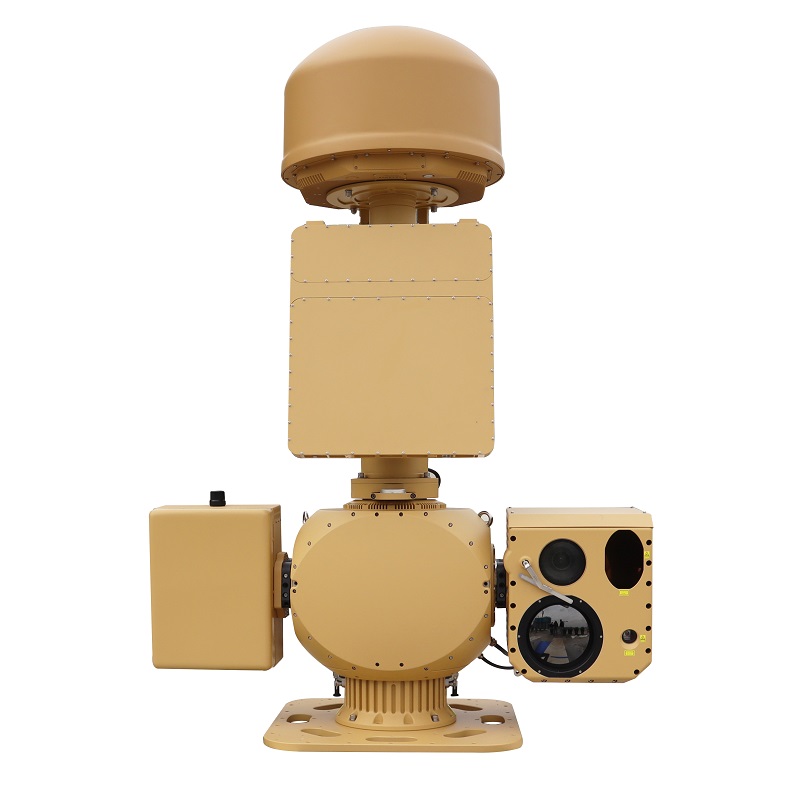
AUS70 Heavy-Duty Integrated C-UAS System
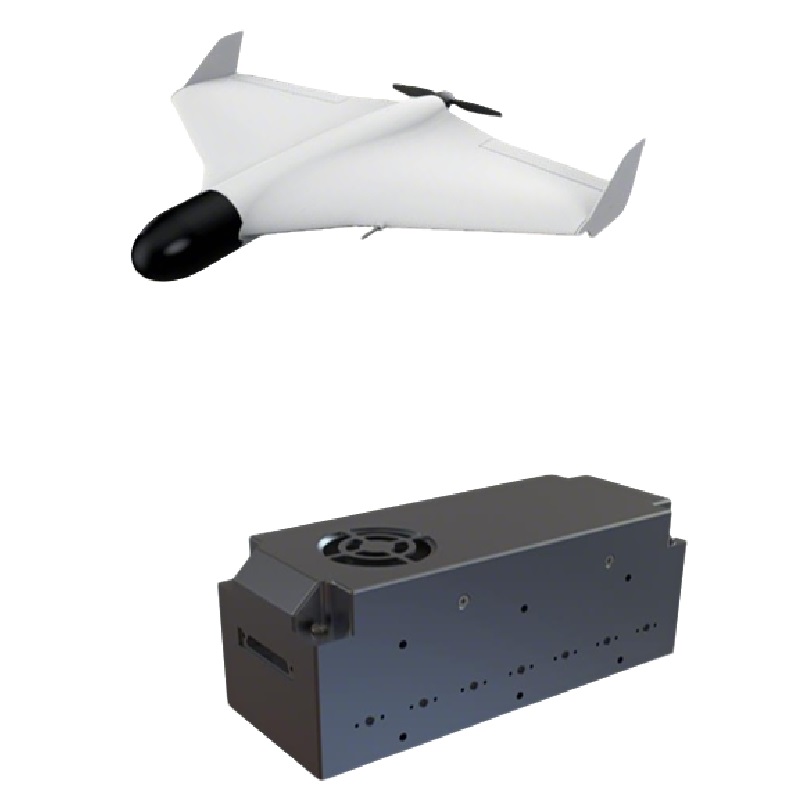
Anti-Drone Jammer Seeker
AD SERIES
Anti-jamming antenna AJ410
Anti-jamming antenna AJ440
Radar Absorbing Agents