Iran Shahed Drone Inventory 2026: How SkyPath’s Shahed-136 Evolved-X2500 Could Redefine Loitering Munitions in the US-Iran Conflict
 author
 - 20th March 2026
Those monitoring Gulf operations in early 2026 have watched the Iran Shahed drone inventory 2026 with particular attention. Production sites have taken hits, yet dispersed lines continue turning out hundreds of units each week. More than 2,100 Shahed-136 variants have already flown in anger since late February, striking facilities from Bahrain to the UAE. The numbers hold steady because the original platform remains inexpensive to build and simple to launch in volume. Each sortie forces layered air defenses to burn through multimillion-dollar interceptors, and that equation has not changed.
Sustained pressure has laid bare the operational limits of the baseline design. The Shahed-136 Evolved-X2500 was developed specifically to close those gaps while keeping the cost structure that makes saturation attacks practical. The platform retains the familiar delta-wing layout and piston propulsion, then adds modern guidance layers, selectable sensors, and active emitter suppression. The outcome is a system that reaches farther, decides faster, and survives better in the electronic warfare environments now common across the region.
The Scale of Iran’s Shahed Operations in 2026
Weekly output from Iranian facilities, even after targeted strikes, still supports rapid replenishment. Teams tracking open-source imagery and regional reporting place current stockpiles in the thousands, with fresh airframes rolling out steadily. The low unit cost—roughly twenty thousand dollars in many estimates—creates a persistent mismatch. One drone can tie up assets worth orders of magnitude more. That imbalance has defined recent engagements across the Persian Gulf.
On 28 February, a mixed wave reached Naval Support Activity Bahrain. Most rounds were engaged, yet a single penetrator damaged a key radar installation. The incident illustrated a recurring pattern: volume overwhelms early-warning nets, but follow-on precision suffers when electronic countermeasures tighten. The Iran Shahed drone inventory 2026 continues feeding those waves, and commanders on both sides have adjusted expectations accordingly.
Where the Original Design Falls Short
Repeated theater experience has highlighted three consistent vulnerabilities in the baseline Shahed-136. Satellite navigation remains fragile once jamming begins, especially over water or near urban clutter. The seeker head lacks the resolution and autonomy needed against mobile or radar-protected targets. Most critically, the platform cannot suppress the very emitters that cue interceptors. Once a fire-control radar locks, attrition rates climb sharply.
These constraints have surfaced in nearly every major exchange this year. Saturation still achieves area denial, yet the percentage of drones that reach assigned targets has declined as defenses integrate better electronic protection. The gap between launch numbers and actual damage has widened. That reality has driven demand for evolutionary upgrades capable of operating inside the same electronic warfare envelope.
Core Specifications of the Shahed-136 Evolved-X2500
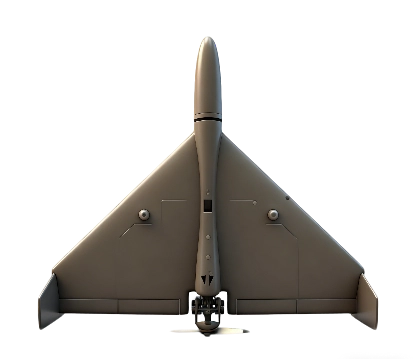
The X2500 extends every operational parameter without abandoning the airframe philosophy that proved effective. Maximum range reaches 2,500 kilometers. Cruise speed holds at 180 kilometers per hour, with dash capability to 210. Endurance stretches to 840 minutes—fourteen full hours aloft. Service ceiling sits at 4,000 meters, and the platform carries a 50-kilogram payload while maintaining circular error probable under three meters.
Physical dimensions support rapid deployment. Wingspan measures 2.5 meters, fuselage length 3.4 meters, and height 0.8 meters. Folded for transport, the package shrinks to 1.34 by 0.55 by 0.39 meters. Empty weight of 160 kilograms leaves clear margin for mission-specific modules. These figures combine to deliver a loitering munition that loiters longer, reaches deeper, and delivers heavier effects than its predecessor while retaining the low radar signature operators have come to expect.
The Anti-Radiation Seeker: Turning Radar into a Target
The anti-radiation seeker has proven the most decisive addition for missions inside radar-dense environments. The module weighs under two kilograms and occupies 236 millimeters in diameter by 202 millimeters in length. Coverage spans 2 to 18 gigahertz, handling conventional pulse, pulse-compression, and frequency-modulated continuous-wave signals alike.
Detection performance stands out in practice. Against a typical 10-kilometer radar, the seeker acquires the emitter from 100 kilometers away. Sensitivity reaches minus 75 decibels per milliwatt, with false-alarm rates below one in ten thousand and intercept probability above ninety percent. Search covers the forward hemisphere—plus or minus 90 degrees azimuth and plus or minus 45 degrees elevation relative to the flight path.
Classification occurs in under a second. High-priority fire-control radars, including types such as AN/APG-68 or equivalent S-, X-, and Ku-band systems, receive immediate attention. Transition from search to track mode completes in 50 milliseconds or less. Guidance data follows standard protocols, allowing direct handoff to the inertial suite for terminal guidance. Emitter classification accuracy during autonomous scan exceeds 95 percent.
In theater engagements, the seeker changes the sequence. A defending radar that illuminates to guide surface-to-air missiles now reveals its own position. The Shahed-136 Evolved-X2500 can remain at safe standoff, wait for activation, then close while companion platforms draw attention elsewhere. The effect opens corridors for follow-on strikes at far lower overall cost. Defense planners who once counted on radar dominance now face the prospect of losing those same assets to a passive, low-cost platform.
Gulf operations have already demonstrated the requirement. Whenever early-warning nets activate against incoming swarms, the same radars become beacons. A seeker that exploits that moment without emitting its own signal adds survivability the original Shahed-136 never possessed.
Complementary Modules That Complete the Package
Supporting systems enhance the seeker’s effectiveness. A 100-millimeter dual-mode electro-optical and infrared pod supplies day-and-night confirmation. Visible-light resolution reaches 3,840 by 2,160 pixels; the thermal channel uses 640 by 512 pixels with an 8-to-12-micrometer detector. Detection extends to 2,000 meters in daylight and 1,500 meters in infrared, with recognition at slightly shorter ranges. Stabilization accuracy holds to 0.1 milliradian, and gimbal travel covers wide arcs in both axes.
When satellite signals vanish, the vision-plus-inertial navigation module maintains course. It fuses visual positioning with high-precision MEMS inertial data and an integrated satellite receiver. Automatic mode switching keeps positioning within 15 meters even under full jamming or spoofing. The module has reached technology readiness level 7, with full-scale validation complete and a documented path toward progressive localization.
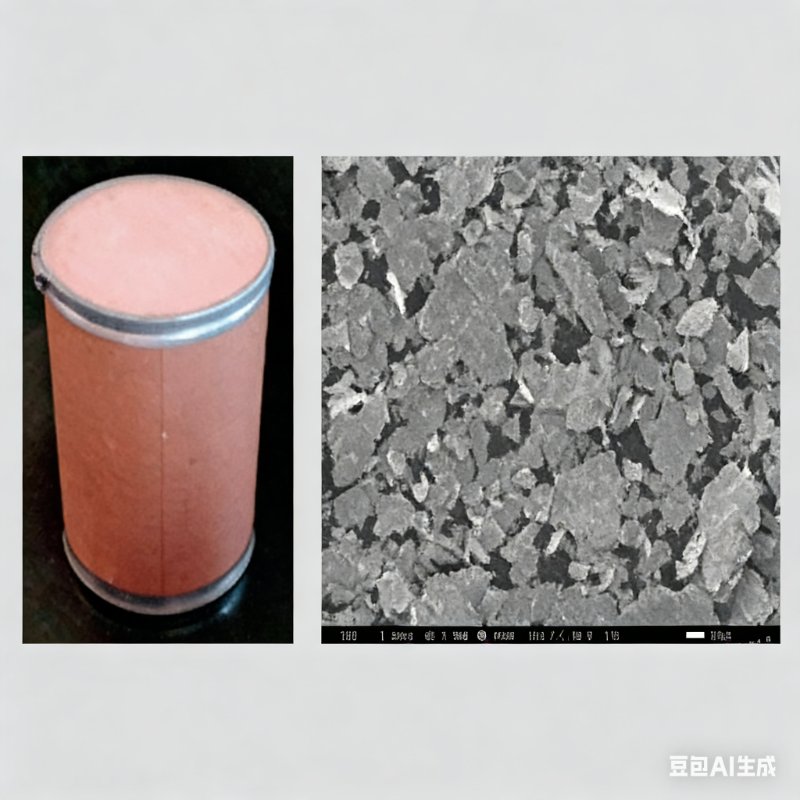
Electronic countermeasures complete the suite. The anti-jamming family protects GNSS bands with ratios above 100 decibels against single sources and retains strong performance under multiple simultaneous threats. Power consumption remains modest, and the design supports embedded receivers plus RTCM corrections. An optional stealth coating reduces radar cross-section across 2-to-18-gigahertz bands using an ultra-thin 0.4-to-0.6-millimeter layer. For missions requiring enhanced return to friendly sensors, a Luneburg lens reflector can increase visibility without active emission.
All modules integrate through standardized interfaces. Operators select only the functions required for each sortie, controlling weight and cost while matching the exact threat profile.
Production and Support Infrastructure
The entire support chain was structured for field-level deployment. A complete fiberglass production line—including cutting machines, autoclaves, and hot-press forming equipment—can be installed for approximately two million dollars and begins delivering full-size airframes up to 3.5 meters within 100 days. Molds for both reconnaissance and attack variants ship with the package, along with engineer training.
Maintenance gear follows the same practical approach. Fueling units, battery cyclers, engine test stands, center-of-gravity measurement rigs, launch control boxes, and magnetic calibration tables arrive with clear specifications and field-ready packaging. A parachute recovery system rated for 150-to-180 kilograms adds a recovery option for training flights or emergency landings. The entire kit is sized for dispersed units rather than centralized depots, aligning with the operational tempo observed in regional campaigns.
Strategic Implications for Current and Future Operations
Combining extended range with precision guidance and emitter suppression opens new planning options. Instead of depending solely on volume, commanders can allocate a portion of the strike package to radar suppression while the remainder exploits the resulting gaps. Once key emitters fall silent, overall attrition drops sharply. The cost equation improves because one successful anti-radiation engagement can protect dozens of follow-on platforms.
Procurement teams already operating low-cost loitering munitions will recognize the advantage. Existing launch infrastructure usually requires only minor adaptation. Training emphasis shifts toward mission planning rather than manual piloting, since the core autonomy manages most flight phases. The modular design allows organizations to scale capability as budgets and threat levels evolve.
About SkyPath
SkyPath UAV operates from headquarters in Singapore with manufacturing and integration facilities located across Southeast Asia. The engineering roster includes 13 specialists holding doctoral degrees and 21 holding master’s degrees, all focused on sensor fusion, autonomous navigation, and electronic warfare integration. Monthly production capacity exceeds 1,000 professional-grade platforms, built under controlled processes that satisfy defense-grade quality standards.
The company’s focus remains on delivering reliable performance in contested environments. Every system incorporates proven autonomy and countermeasures to support border security, counter-unmanned-aircraft missions, and precision strike roles. Full control over design, manufacturing, and testing enables consistent quality while offering configuration flexibility to government and defense customers worldwide.
Conclusion
The Iran Shahed drone inventory 2026 continues to influence daily operations across the Gulf region. The original platform forced a fundamental reassessment of air-defense economics, yet its limitations have grown more apparent under sustained electronic pressure. The Shahed-136 Evolved-X2500 closes those gaps without sacrificing the affordability that made saturation viable. Extended reach, modular payloads, and especially the anti-radiation seeker create a platform suited to both volume attacks and targeted suppression.
Organizations evaluating long-endurance strike systems now have a practical upgrade path. The specifications, support ecosystem, and production model align directly with the operational realities already in play and with those expected in future campaigns.
FAQs
How does the anti-radiation seeker on the Shahed-136 Evolved-X2500 improve performance against integrated air defenses?
The seeker passively locates emitters across 2 to 18 gigahertz at distances up to 100 kilometers, then classifies and tracks them in under 50 milliseconds. This allows the platform to suppress radars that would otherwise guide interceptors, opening corridors for the rest of the strike package.
What navigation options keep the X2500 accurate when GPS signals are jammed in a conflict zone?
A vision-plus-inertial module fuses visual positioning with high-precision MEMS inertial data and an integrated satellite receiver. The system switches automatically between modes and maintains positioning within 15 meters even in fully denied environments.
How many kilometers can the Shahed-136 Evolved-X2500 actually fly on a single mission?
Maximum range reaches 2,500 kilometers at a cruise speed of 180 kilometers per hour. Endurance extends to 840 minutes, giving operators the flexibility to loiter, reposition, or strike deep targets without refueling.
Why would procurement teams choose the X2500 over basic loitering munitions for radar-heavy environments?
The anti-radiation capability directly addresses the most common failure point in current operations: detection by defending radars. Combined with a 50-kilogram payload and sub-three-meter accuracy, the platform delivers both volume saturation and precision suppression at a cost point that supports sustained campaigns.
What production setup is required to manufacture the fiberglass airframe of the Shahed-136 Evolved-X2500 locally?
A complete line including cutting machines, autoclaves, hot-press forming equipment, and full-size molds can be installed for approximately two million dollars and begins producing airframes up to 3.5 meters within 100 days. Training and testing equipment are included for rapid operational readiness.

Main Products
Our Main Products
At SkyPath we develop cutting-edge drones for every situation. Please browse our products.
Contact Us
AUS70 Heavy-Duty Integrated C-UAS System
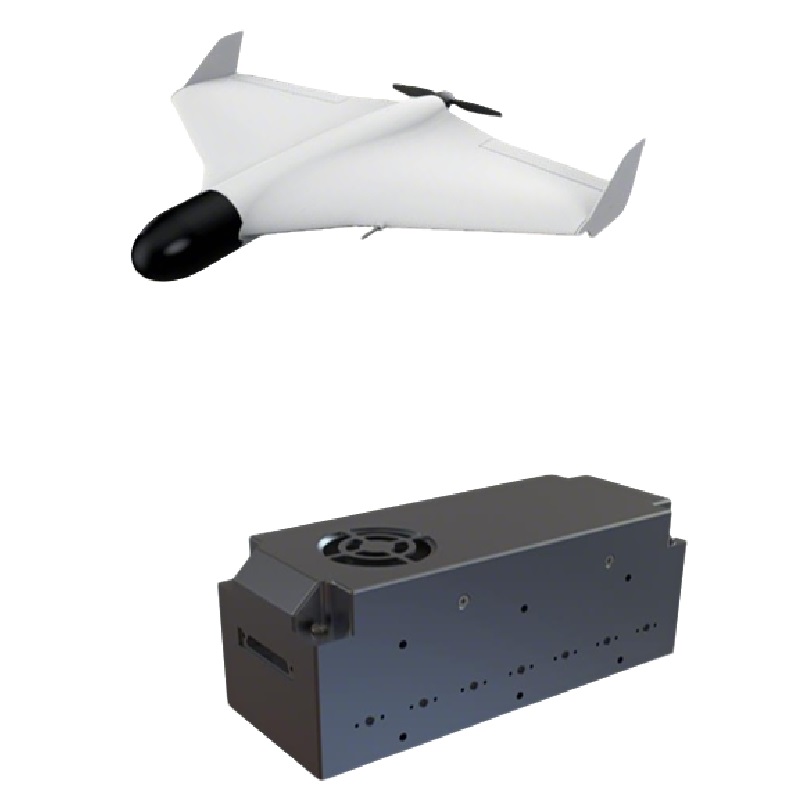
Anti-Drone Jammer Seeker
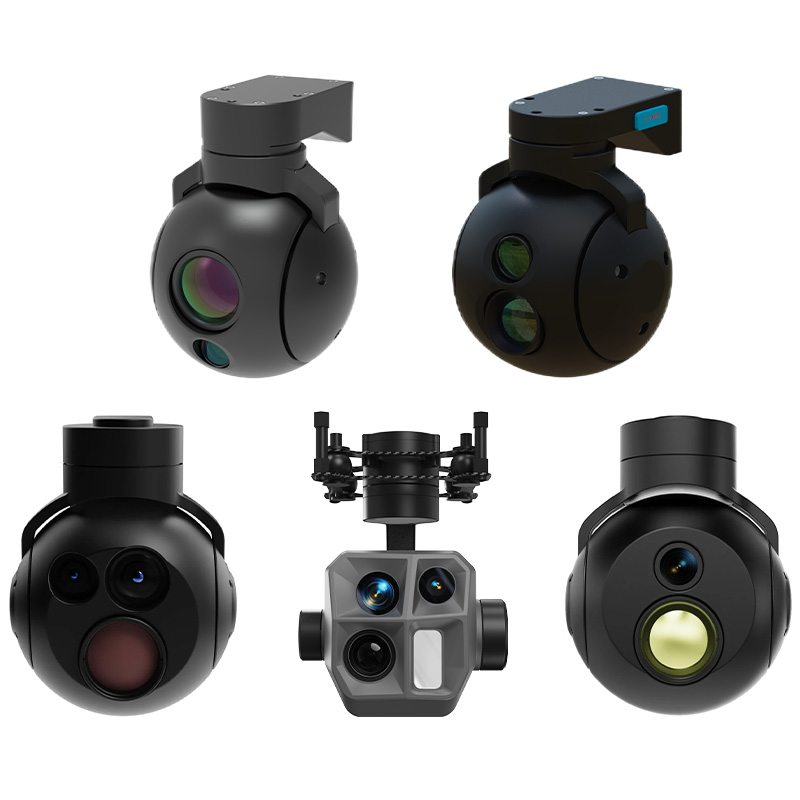
AD SERIES
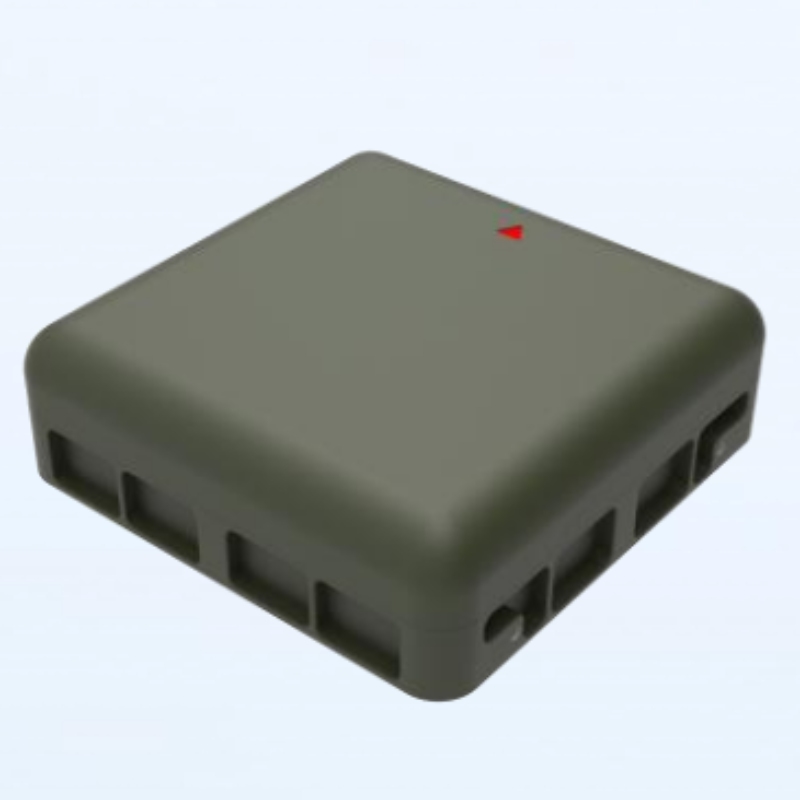
Anti-jamming antenna AJ410
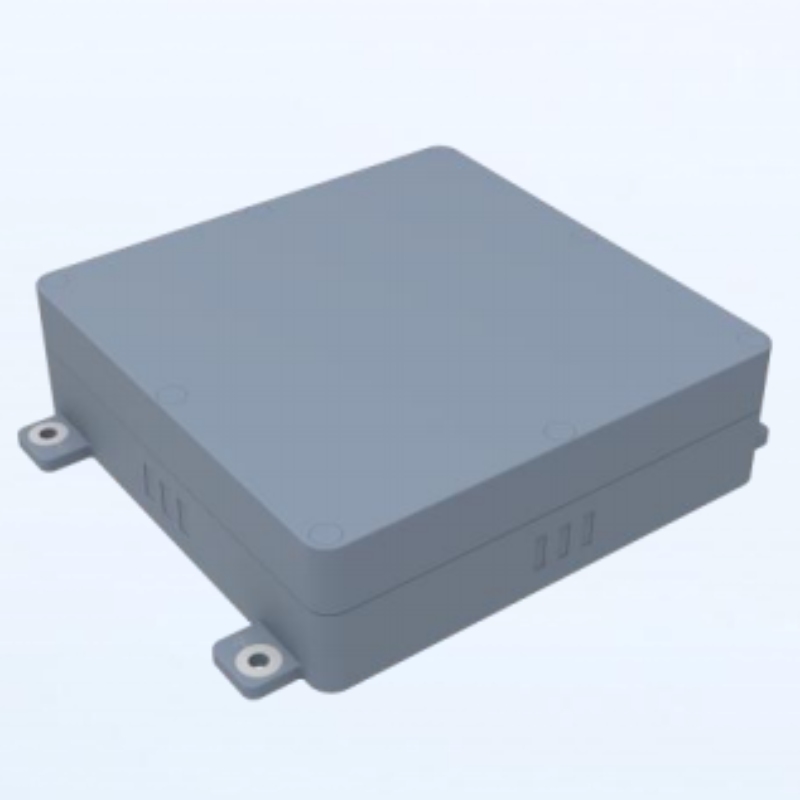
Anti-jamming antenna AJ440
Radar Absorbing Agents