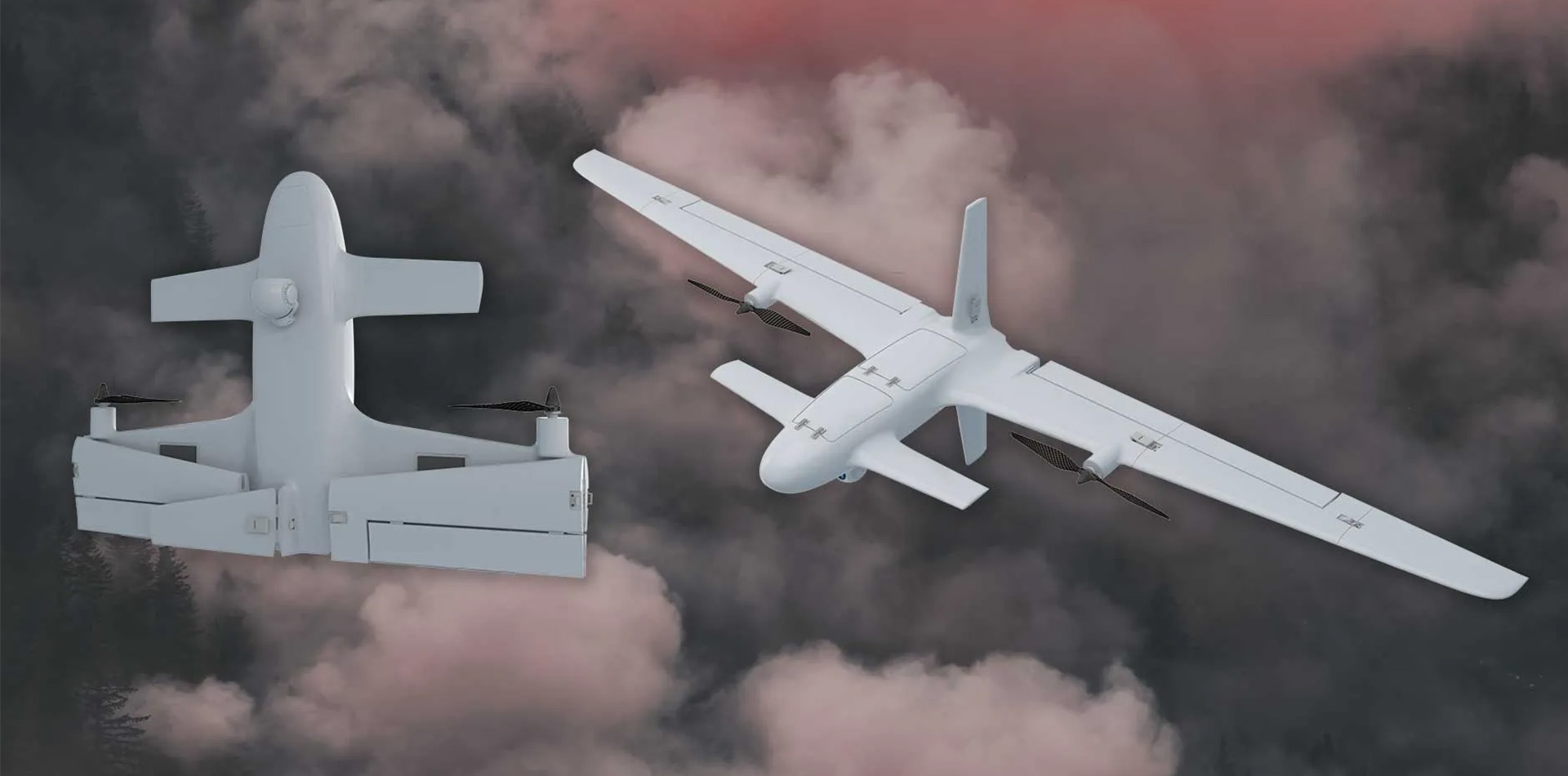

SKYPATH Foldwing Anti-Radiation Seeker Loitering Munitions for Radar Attacks Post-Bahrain Incident
 author
 - 13th March 2026
The February 28, 2026, strike at Naval Support Activity Bahrain changed the conversation around radar defense in forward-deployed locations. Footage that spread quickly online captured a Shahed-type drone flying low toward a large white radome at the Fifth Fleet headquarters in Manama, the impact producing a bright flash followed by thick black smoke rising over the base. Reports from CNN, Defense One, Al Jazeera, and Stars and Stripes detailed the event as one piece of Iran’s broader retaliation after U.S.-Israeli operations targeted sites inside Iran. Coalition air defenses intercepted numerous missiles and drones across the Gulf, yet the Shahed that reached the naval facility demonstrated how persistent, low-speed threats can slip through even layered protections. Base personnel and contractors evacuated to nearby hotels for safety while damage assessments confirmed hits near critical structures.
Events like this sharpen focus on loitering munitions equipped with anti-radiation seekers. These systems orbit over potential target areas, wait passively for radar emissions, and strike when the emitter activates. The Foldwing Series from SKYPATH UAV delivers this capability in configurations suited to high-threat environments, providing a reliable option for radar attack missions highlighted by the Bahrain penetration.
Bahrain Incident Revealed Gaps in Radar Protection
Iranian forces launched a mix of ballistic missiles and one-way attack drones toward U.S. positions in Bahrain, Qatar, Kuwait, and the UAE that Saturday. Intercepts handled many threats, including several Shahed-136 variants, but the drone that breached Naval Support Activity Bahrain followed a profile difficult to counter in real time—low altitude, modest speed, extended flight time. Video evidence showed it nearing the Fifth Fleet area, striking what appeared to be a radar or communications dome, with smoke plumes visible from multiple angles. Initial reports noted no U.S. casualties, but infrastructure damage led to temporary base restrictions and personnel relocations.
Several factors stand out. Radar systems supply vital early warning and targeting data, but active transmission creates a detectable signature for passive homing weapons. The economic disparity is clear—a Shahed platform costs far less than the radar infrastructure it can degrade or destroy. This imbalance drives procurement teams to seek proactive suppression tools rather than purely defensive measures. The Bahrain case, amid saturation tactics, shows how inexpensive drones exploit focus on faster inbound threats, creating exploitable windows in defended zones.
Anti-Radiation Seekers Enable Passive Radar Engagement
Anti-radiation seekers reverse the usual detection game. The seeker scans passively across radar frequency bands, capturing emissions from search, acquisition, or fire-control radars without sending out its own signals. Onboard processing compares signal characteristics—pulse repetition rates, frequency agility, waveform details—against stored threat libraries to classify and prioritize.
In loiter phase, the munition maintains position using inertial guidance fused with visual terrain matching. This approach keeps navigation accurate without satellite input, vital in jammed or GPS-denied settings. Lock-on happens when emissions align with criteria, algorithms weighing signal strength and threat value. Terminal guidance refines to sub-meter levels, directing the vehicle to the antenna array, control van, or power source.
Experience from recent operations confirms the range and effectiveness. Seekers typically acquire emitters at standoff distances, often beyond immediate countermeasure reach. In electronically contested airspace, the passive operation shortens warning time, limiting the target’s ability to shut down or relocate before impact.
Foldwing Series Design for Radar Attack Roles
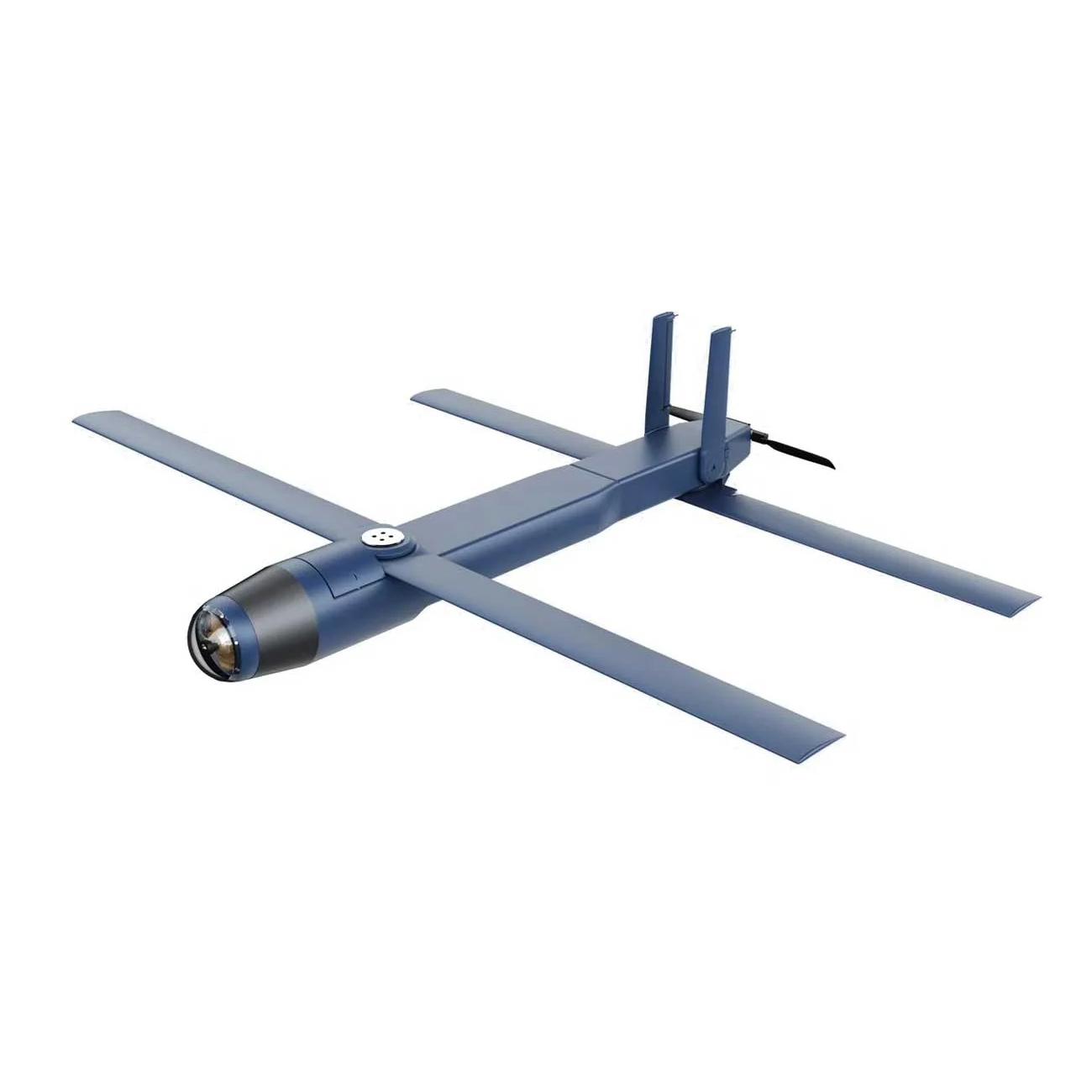
The Foldwing Series—Phantom Razor 110, 165, and 180 models—builds around guidance that withstands denial efforts. AESA seeker integration supports all-weather multi-target tracking and jamming resistance, while the platform’s framework accommodates radar-homing modes aligned with suppression requirements.
Tandem folding wings allow compact storage and field deployment. The Phantom Razor 110 weighs 5.5 kilograms total, including a 2-kilogram multi-mode warhead, and launches from individual tubes carried by a single operator. The 165 variant extends range to 100 kilometers with cruise speeds above 198 km/h; the 180 reaches 200 kilometers at over 162 km/h, enabling placement farther into contested areas.
Navigation relies on fiber-optic gyroscope inertial units combined with visual-inertial fusion, delivering sub-meter precision absent GPS. This sustains prolonged orbits over designated zones until radar emissions activate the seeker, followed by rapid terminal descent.
Warhead flexibility matches varied targets. Impact mode provides direct structural damage to antennas, proximity fusing generates fragment patterns against arrays, delayed detonation penetrates hardened enclosures. The 2-kilogram payload on lighter models concentrates energy against components, with greater effects scaled on heavier variants.
Deployment fits distributed operations. Bee Colony vehicle-mounted boxes reload rounds in under 30 seconds, achieving full salvo readiness in less than 90 seconds. Fiber-optic remote control within 100 meters offers low-latency management in elevated-threat zones, while all-electric propulsion reduces acoustic and thermal footprints during approach.
Scenarios for Radar Attack in Integrated Defenses
Consider an enemy air defense network shielding maneuver forces: early-warning radars feed acquisition units that cue fire-control systems. Standard suppression often depends on standoff missiles or manned aircraft, each involving substantial risk and cost.
Foldwing alters the equation. Operators select an overwatch area from intelligence sources. Launch follows, ascent occurs, loiter begins. Radar activation to scan draws seeker lock, classification verifies, and attack initiates. Descent compresses reaction time. Successful engagement silences the emitter, opening corridors for follow-on assets.
In coordinated strikes, multiple units share tasks. One orbits to provoke emissions; others deliver sequenced hits. Disruption spreads through the network, hindering enemy coordination. The Bahrain incident reflects similar patterns: a single low-cost drone capitalized on defenses oriented toward higher-speed threats. Persistent passive homing extends that principle, combining dwell time with precision.
Foldwing Advantages in Suppression Missions
Conventional anti-radiation missiles typically commit based on pre-launch intelligence, risking expenditure if the emitter ceases transmission or moves. Loitering extends observation, committing only on confirmed radiation and improving kill probability against intermittent or mobile radars.
Portability reshapes tactical employment. Tube-launch brings suppression to infantry, special operations, or small vehicle teams without dedicated launchers. Electric drive and low signatures facilitate stealthy positioning, while AI-assisted recognition—validated above 99% reliability—minimizes collateral concerns. Man-in-the-loop channels maintain final human oversight where operational rules require it.
Engagement economics support wider use. A single platform addressing multiple emitters sequentially over extended periods reduces total expenditure compared to missile salvos. These attributes factor prominently in acquisition evaluations.
SKYPATH UAV: Supplier of Military Unmanned Systems
SKYPATH UAV provides complete unmanned aerial and counter-UAS solutions to government, defense, and law enforcement organizations. Headquartered in Singapore, with manufacturing and integration facilities distributed across Southeast Asia, the company oversees development from design to field deployment.
The engineering team includes 13 PhD-level specialists and 21 with master’s degrees, specializing in AI perception, flight control, sensor fusion, autonomous logic, precision guidance, and anti-jamming methods. Production exceeds 1,000 professional-grade units monthly, supported by repeatable processes that maintain quality under stringent requirements.
Platform capabilities encompass long-range autonomous flight, sub-meter navigation in denied environments, AI target recognition reliability over 99%, and ranges up to 2,500 kilometers on select models. AESA detection extends beyond 5 kilometers in applicable configurations, paired with circular error probable under 0.5 meters for precise engagements.
Conclusion
The Bahrain strike on February 28, 2026, underscored that radar emissions expose critical assets in modern conflicts. Loitering munitions with anti-radiation seekers transform that exposure into operational opportunity, delivering sustained overwatch and accurate suppression. The Foldwing Series advances this through resilient navigation, flexible deployment, and adaptable payloads tailored to radar attack needs. As threats develop, procurement specialists evaluating SEAD options prioritize platforms that combine endurance, autonomy, and cost control in demanding field conditions.
Frequently Asked Questions
How do anti-radiation seekers work in loitering munitions for radar attacks?
Anti-radiation seekers passively detect radar emissions across bands, locking onto active sources without transmitting. In the Foldwing Series, this integrates with visual-inertial fusion and inertial navigation for positioning in jammed zones, achieving sub-meter accuracy on emitting radars.
What makes Foldwing suitable for radar attack missions after events like Bahrain?
Foldwing supports tube-launch on lighter models and rapid-reload vehicle boxes on larger ones. Folding wings and setup under 90 seconds enable forward deployment, addressing radar vulnerabilities seen in the Shahed strike at Naval Support Activity Bahrain.
Which warhead configurations does Foldwing offer for radar suppression?
Multi-mode warheads include impact for direct antenna strikes, proximity for fragment effects on arrays, and delayed for penetrating shelters. The 2-kilogram payload on Phantom Razor 110 focuses energy, with scaling on 165 and 180 variants.
Why select Foldwing loitering munitions over traditional anti-radiation missiles for SEAD?
Foldwing provides extended loiter to await radar activation, cutting premature commitment. Tube portability, jamming-resistant navigation, and lower costs fit distributed operations, especially when incidents highlight persistent radar suppression requirements.
How does Foldwing achieve precision radar targeting without GPS?
Fiber-optic gyroscopes fused with visual-inertial data deliver sub-meter navigation. This supports stable orbits and dives on detected emissions under electronic countermeasures, maintaining performance in contested electromagnetic environments.

Main Products
Our Main Products
At SkyPath we develop cutting-edge drones for every situation. Please browse our products.
Contact Us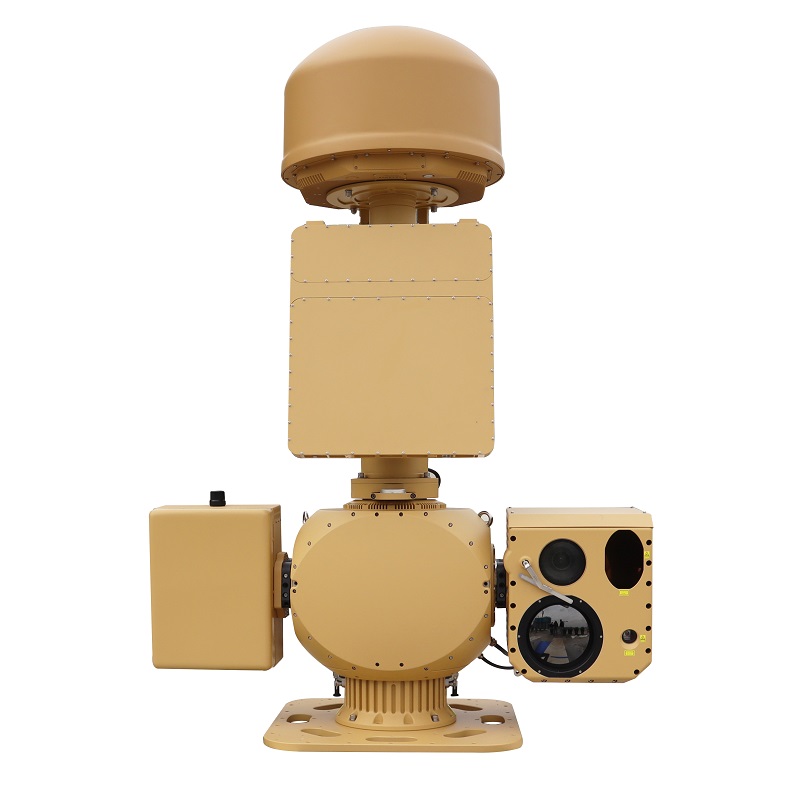
AUS70 Heavy-Duty Integrated C-UAS System
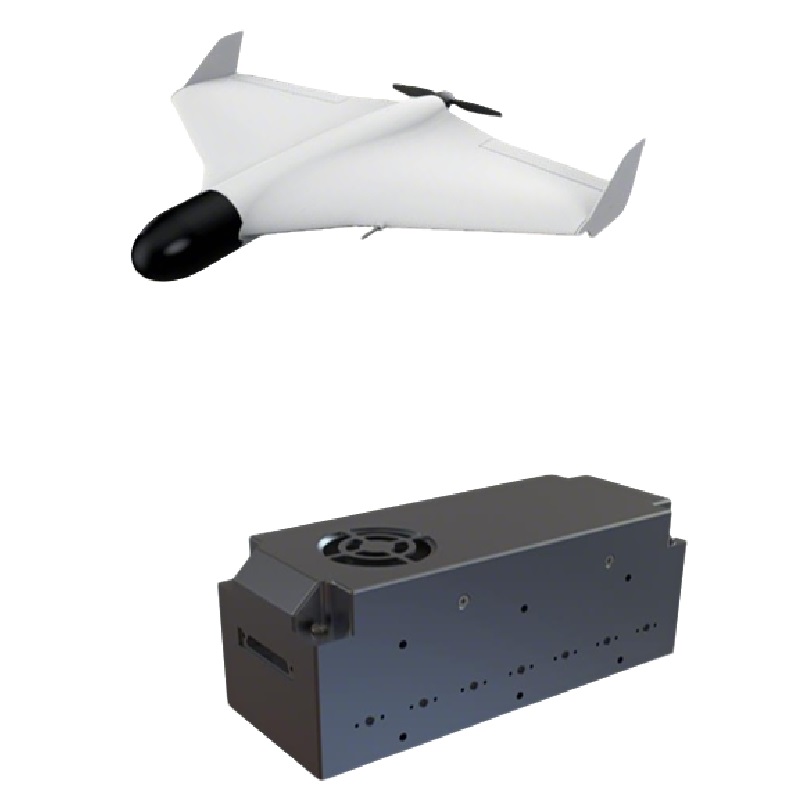
Anti-Drone Jammer Seeker
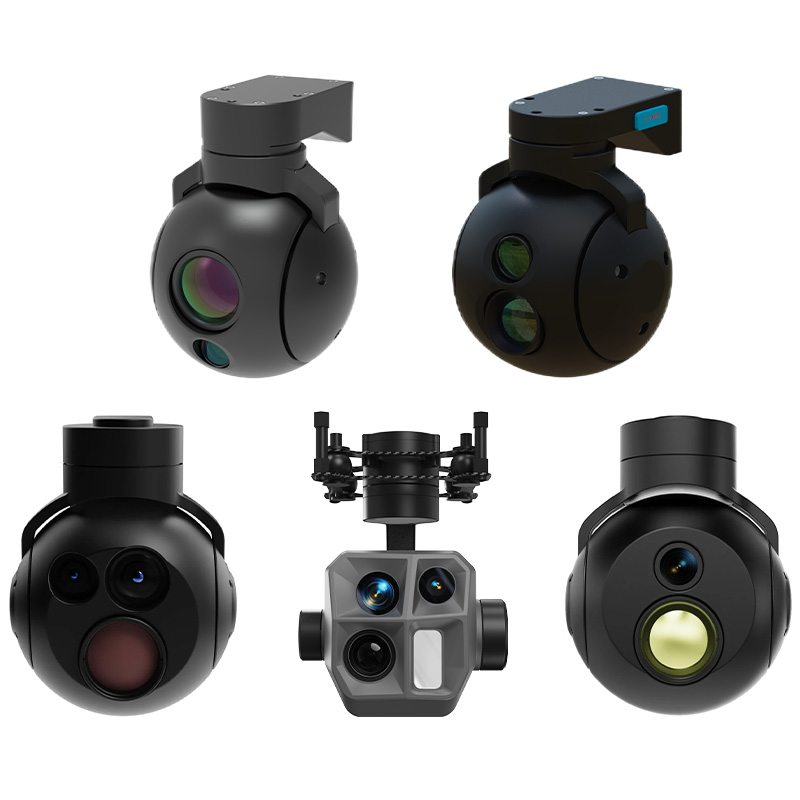
AD SERIES
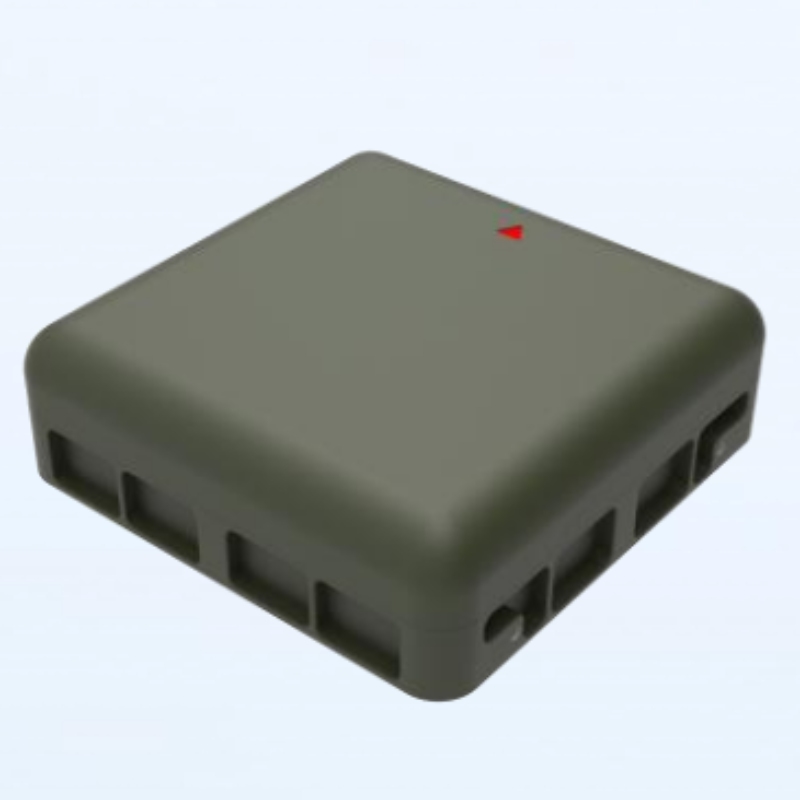
Anti-jamming antenna AJ410
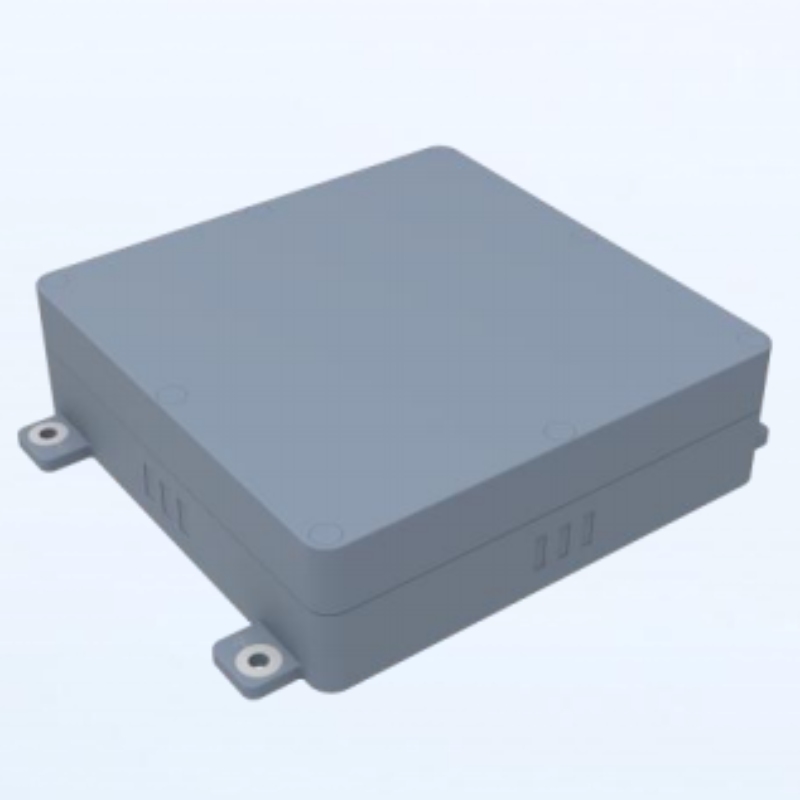
Anti-jamming antenna AJ440
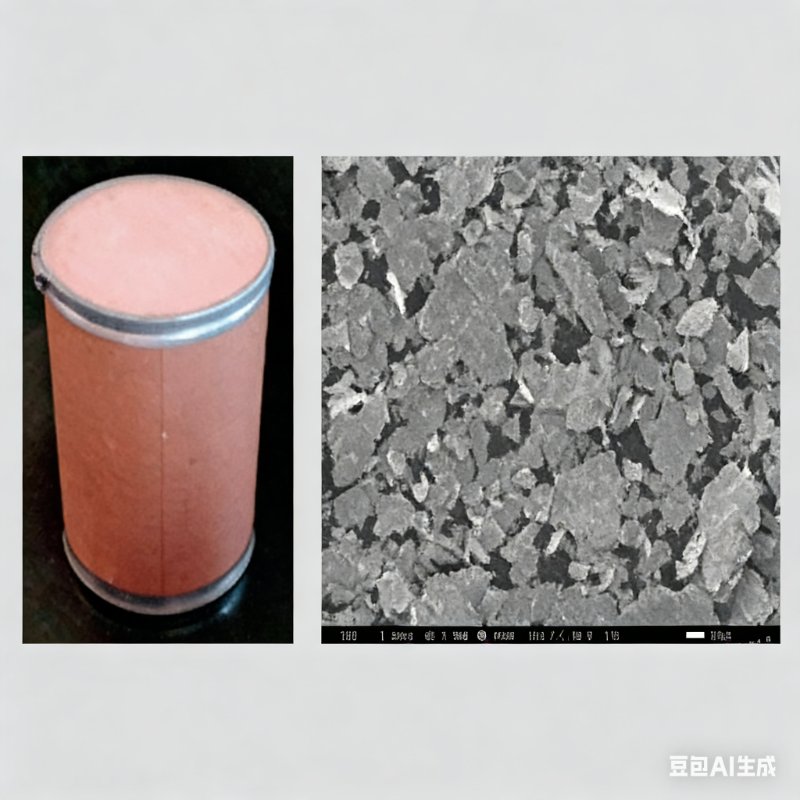
Radar Absorbing Agents