
2026 Military Drone Trends How Iranian Shahed-Style Saturation Attacks Drive US Investment in Long-Endurance and Anti-Jamming Platforms
Iranian Shahed-style saturation attacks have forced militaries to confront the unforgiving economics of modern unmanned conflict. The Shahed-136 and its derivatives, built for twenty to fifty thousand dollars apiece with ranges pushing past one thousand kilometers, show how volume alone can degrade even the most capable air defense networks. When waves of dozens or hundreds arrive in tight sequence, radar operators drown in tracks, missile stocks vanish, and the cost-per-engagement swings heavily toward whoever can keep feeding inexpensive airframes into the fight without pause. Ukraine offers the starkest evidence. Russian forces have integrated Shahed variants into nightly routines, with production already at several hundred units daily in late 2025 and forecasts pointing to further ramp-up through 2026. Interception numbers hold respectable in many cases—often north of ninety percent—but the steady consumption of multimillion-dollar rounds accumulates while the launch side replaces platforms at trivial added expense. The imbalance carries straight into maritime settings: tight sea lanes in places like the Persian Gulf shrink reaction space, compress detection windows, and expose the finite nature of shipboard magazines against threats that regenerate cheaply and persistently. The US military has pivoted acquisition to match this reality. Current funding streams favor airframes that hold position longer in jammed environments, shrug off electronic denial, and maintain effects with reduced risk to crews or high-value hulls. Long-endurance designs and anti-jamming hardening have become non-negotiable elements in forward programs. The Persistent Threat from Shahed-Style Saturation Attacks Shahed drones rely on basic, scalable engineering. The Shahed-136 cruises subsonic, tracks low to postpone radar contact, and packs a warhead capable of meaningful strikes on infrastructure or vessels. Iranian and Russian production combined already delivers hundreds daily as 2025 closes, with projections for daily rates nearing or exceeding one thousand soon. Tactics layer in decoys, faster missiles, or offset timing, spreading defensive effort across broader axes and amplifying the strain on layered systems. Ukraine supplies continuous proof. Barrages of dozens to over a hundred Shaheds per night demand selective engagement, allowing occasional breakthroughs despite solid interception percentages overall. The economic tilt holds firm: each kill depletes costly munitions while the adversary sustains supply at low marginal cost. Parallel patterns emerge in Red Sea actions and Iranian drills rehearsing mass drone strikes on naval formations. Maritime domains heighten the problem. Narrow passages limit maneuver, shortening timelines from first detection to intercept. Carrier strike groups, with Aegis radars, SM interceptors, close-in weapons, and directed-energy additions, hit the same wall: magazines carry fixed loads, reloads take time, and logistics ships become targets. Iranian doctrine and visible exercises treat saturation as a standard escalation tool. US Military Response: Shifting Investment Priorities in 2026 Acquisition has moved decisively. The Drone Dominance program, now heavily funded, aims for hundreds of thousands of small expendable unmanned systems in service by decade’s end, with tens of thousands reaching initial capability in 2026. Earlier Replicator work has solidified into tracks for attritable autonomous platforms and dedicated counter-small UAS kits. Budgets reflect the focus. Fiscal 2026 counter-unmanned aerial systems funding hits multi-billion levels, directed at low-collateral kinetics, high-power microwaves, and AI-driven track handling for dozens of simultaneous targets. These lines aim to counter volume with volume at bearable expense. Hardening platforms draws equal resources. Forward long-endurance UAVs face heavy electronic warfare. Jammers blank GPS and datalinks, disrupting navigation and control. Resilient options use vision-inertial fusion—merging camera input with inertial data—to hold sub-meter accuracy without satellites. Multi-element antennas—four- or eight-channel setups—keep communications alive through beam steering and frequency shifts. Autonomous onboard logic carries missions forward during link loss. Market signals match the direction. Military drone spending forecasts show steady climb through 2030, led by demand for extended flight time, anti-jamming links, and modular payloads. Hybrid propulsion pushes endurance toward multi-day flights in some classes. Payload bays swap roles fast: EO/IR turrets one mission, EW suites the next, relay antennas to span jammed zones. Testing and deployments confirm the path. Attritable platforms loiter long above contested areas, feed steady tracks to ships and aircraft, and cue interceptors without pulling fire onto capitals. Anti-jamming emphasis stems from real tactics—jammers placed to blind UAVs mid-swarm. Systems that recover on their own and keep data flowing provide the overwatch needed to break saturation cycles. Emerging Trends Shaping Military Drone Development Through 2030 Trajectories converge as saturation tactics advance. Swarm intelligence advances with AI enabling on-the-fly formation shifts to dodge radar or slip through gaps. Counter networks answer with fused sensors—radar, passive RF, EO—that merge data across nodes for rapid prioritization. Long-endurance airframes gain weight for unbroken coverage. Designs offering twelve-plus hours, or multi-day with refueling or solar in prototypes, change how assets deploy. Over fleets, they orbit high, delivering constant feeds while countering jamming on navigation or control. Platforms such as the Phantom Reaper X1500 long-endurance anti-jamming UAV deliver 14-hour endurance, military-grade quad-antenna anti-jamming with vision-inertial fusion navigation, and AI-driven targeting for persistent operations in high-threat, contested environments. Anti-jamming moves past basic hopping. Steered antennas and inertial-visual fusion support full autonomy in extended denial. Heavy payloads add effectors—nets for capture, lasers to dazzle, relays to bridge jammed sectors. Modularity rules procurement. Operators want quick swaps: ISR today, EW tomorrow, short downtime. Shorter cycles, hardened commercial parts, high-rate lines enable the scale to match adversary output. SKYPATH UAV: Providing Reliable Long-Endurance and Anti-Jamming Solutions SKYPATH UAV supplies military-grade unmanned aerial vehicles and counter-UAS systems to defense, government, and law enforcement clients. Headquartered in Singapore with manufacturing and integration facilities in Southeast Asia, the company fields a team of thirteen PhD holders and twenty-one master’s-level specialists in AI pod integration and flight control. Monthly capacity reaches one thousand units. Platforms feature vision-inertial fusion navigation for sub-meter accuracy in denied environments. Anti-interference communications use multi-element antennas and signal processing to hold links under jamming. AI-assisted targeting hits recognition accuracy above ninety-nine percent in varied conditions. Heavy-lift and VTOL designs handle wide payloads—from ISR sensors to counter-drone tools—while staying stable in tough maritime and land settings. Clients get full delivery, mission-tailored builds, fast global shipping, and proven reliability. Where saturation attacks require extended watch and tough countermeasures, these systems bolster layered defenses in step with current needs. Conclusion Shahed-style saturation attacks have stripped away illusions about conventional defenses, driving militaries toward platforms that last longer, resist jamming, and scale without breaking budgets. The US military’s focus on long-endurance airframes, anti-jamming hardening, and modular flexibility draws from hard-won lessons in ongoing fights and clear views of what lies ahead. As production lines expand and technologies solidify, these systems will determine control in airspace thick with electronic interference and sheer numbers. FAQs How are Shahed-style saturation attacks shaping 2026 military drone trends? Shahed-style saturation attacks expose gaps in legacy defenses and speed US spending on long-endurance UAVs for steady overwatch and anti-jamming platforms that hold up in denied airspace. Why do long-endurance UAVs matter so much against drone saturation threats? Long-endurance UAVs keep ISR flowing and relay data through saturation events, widening defensive bubbles and guiding intercepts without constant manned risk or fragile links. What makes anti-jamming so important for military drones in 2026? Anti-jamming features like vision-inertial fusion and multi-antenna modules let drones run autonomously when jammers hit GPS and datalinks in swarm attacks. How is the US military tackling Shahed saturation attacks in 2026? The US military meets Shahed saturation attacks with programs pushing attritable systems, long-endurance UAVs with anti-jamming navigation, and scalable counter-UAS tools built for volume. Why are anti-interference platforms climbing the priority list in drone strategies? Anti-interference platforms maintain performance in jammed zones, backing persistent ISR, interceptor guidance, and networked counters against high-volume drone threats.
Learn More
Iranian Shahed Drone Swarms vs US Aircraft Carriers: How the Navy’s 2026 Hedge Strategy Counters Saturation Threats
Iranian Shahed drone swarms represent a persistent asymmetric challenge for carrier strike groups, particularly when platforms such as the Shahed-136 and Mohajer series support coordinated mass launches that capitalize on extreme cost disparities and push layered defenses to their limits. The recent transit of the USS Abraham Lincoln strike group into CENTCOM waters underscores this reality, as low-observable, extended-range unmanned systems execute approaches along diverse azimuths, compelling defenders to expend costly interceptors on threats that remain comparatively inexpensive to produce and deploy. Defense analyses from late January 2026 repeatedly highlighted saturation attacks originating from these Iranian assets, where experts pointed to the ability of such swarms to overload radar cueing and exhaust missile stocks within restricted operating areas. Chief of Naval Operations Adm. Daryl Caudle detailed the hedge strategy during his Apex Defense keynote and prior comments, presenting it as a direct counter to budgetary realities and irregular threats. The concept augments established carrier formations with tailored forces and tailored offsets—attritable unmanned vehicles alongside scalable countermeasures—permitting effective management of high-consequence yet lower-probability events while avoiding excessive commitment of principal assets. The discussion that follows dissects the Shahed-series attributes fueling saturation concerns, the inherent constraints within standard multi-layered defenses, the operational framework of the Navy’s hedge strategy heading into 2026, and concrete measures to bolster countermeasures, with particular attention to resilient unmanned aerial vehicles optimized for denied environments. Iranian Shahed/Mohajer Saturation Attack Capabilities The Shahed-136 forms a central element in Iran’s approach to offset warfare. Configured as a delta-wing, expendable attack drone, it cruises near 185 km/h, integrates a 40-50 kg warhead, and reaches operational ranges between 1,000 and 2,500 km based on variant. Domestic production keeps unit costs between $20,000 and $50,000—orders of magnitude below equivalent cruise missiles. Minimal radar signature combined with nap-of-the-earth profiles delays reliable detection until late phases of flight. Deployed as swarms, the Shahed generates overwhelming numerical pressure: tightly sequenced waves intermixed with decoys and quicker ordnance compel defenders to allocate assets across an expansive threat envelope. The Mohajer-6 augments this profile through dedicated reconnaissance and targeted strike functions, supported by enhanced sensor suites for accurate designation. Iterative refinements drawn from active regional engagements have refined swarm synchronization and low-level ingress techniques. Observed patterns across conflicts illustrate saturation achieving results primarily via economic leverage—defenders rapidly consume premium interceptors while the attacker replenishes at negligible marginal cost. Within a Persian Gulf context, reduced reaction timelines and constrained sea space exacerbate the problem, converting carrier strike group advantages into vulnerabilities when threats converge in volume from disparate directions. Iranian Shahed drone swarms in saturation attacks thrive on precisely this imbalance, compelling disproportionate resource allocation from defending forces. Limitations of Traditional US Navy Multi-Layered Defenses Against Saturation Carrier strike groups maintain a comprehensive, graduated defensive posture. Aegis destroyers furnish extended-range detection and kinetic engagements through SM-6 and ESSM families. Terminal-layer systems—Phalanx CIWS alongside Rolling Airframe Missiles—neutralize penetrators, while HELIOS directed-energy weapons deliver instantaneous, inventory-independent effects on diminutive targets. Electronic attack assets from Growler platforms sever guidance datalinks and introduce deception into enemy sensors. Saturation nevertheless uncovers fundamental shortcomings. Interceptor rounds command multimillion-dollar price points; opposing drones fall into the tens-of-thousands range. Sustained engagements empty magazines at accelerated rates, and systems engineered for high single-shot kill probabilities exhibit degraded performance amid concurrent, multi-vector inbound tracks. Theater-specific geography further constrains options, curtailing evasion margins and compressing detection-to-engagement windows. The imbalance sharpens when opponents sustain economical production of expendable platforms. Conventional architectures manage discrete salvos effectively yet encounter scaling difficulties against sheer quantity, necessitating a pivot to distributed, economically viable counters. Abraham Lincoln defense against Shahed saturation attacks exemplifies these boundaries, where economic asymmetry and threat density strain established layered architectures. The Navy’s 2026 Hedge Strategy: Tailored Forces and Offsets Explained Adm. Caudle characterized the hedge strategy as a realistic accommodation of constraints—industrial throughput, fiscal allocations, and mission requirements—while safeguarding core lethality and adaptability. It juxtaposes sophisticated multi-role platforms against tailored forces: purpose-built units aligned to regional contingencies—and tailored offsets: expendable unmanned surface vessels, medium unmanned surface vessels, unmanned underwater vehicles, and volume-oriented, low-cost interceptors. Offsets function as force extenders. Commanders avoid dedicating carriers to every contingency by fielding risk-tolerant assets that provide early warning, expand sensor horizons, and absorb opening salvos. Unmanned platforms perform ideally in this capacity—extended standoff without personnel exposure, continuous persistence, and tolerable loss thresholds. In application to Shahed swarms, hedge architecture anticipates outer defensive shells comprising attritable USVs fitted with detection suites and interceptors for standoff engagements. Economical drone interceptors achieve parity in numbers, while autonomous relays supply continuous tracking feeds to the strike group, thereby minimizing exposure of capital ships. The distributed construct mitigates centralized vulnerabilities and accommodates threat evolution. US Navy hedge strategy 2026 tailored offsets establish the doctrinal basis for addressing Iranian drone saturation attacks without exclusive dependence on premium platforms. The approach augments rather than supplants carrier-centric power projection, employing unmanned offsets to enhance air wing utility and calibrate risk in irregular engagements. Actionable Solutions for Countering Shahed Saturation Attacks in 2026 Immediate measures emphasize rapid improvements: expanding inventories of cost-effective interceptors, hastening fielding of directed-energy weapons for instantaneous engagements, and refining electronic warfare suites to interrupt control pathways at extended ranges. Intermediate efforts prioritize accelerated incorporation of unmanned elements. Developmental MUSVs and USVs can accommodate counter-drone modules, establishing interconnected barriers that disseminate targeting information and synchronize effects. AI-enhanced sensor integration elevates track quality in cluttered domains, improving success rates against orchestrated inbound formations. Extended horizons concentrate on durable, enduring platforms. Long-endurance unmanned aerial vehicles incorporating anti-interference architectures sustain surveillance in jammed environments via vision-inertial fusion navigation, attaining sub-meter positional fidelity. Platforms such as the Phantom Reaper X1500 long-endurance anti-jamming UAV exemplify this capability, offering 14-hour endurance, military-grade GPS/Beidou anti-jamming with quad-antenna inertial navigation, and AI-driven targeting for persistent operations in denied environments. Heavy-payload variants enable flexible mission sets—ISR bridging, laser dazzle functions, or physical capture mechanisms—broadening protective envelopes absent frequent manned commitments. These systems demonstrate robustness under harsh maritime conditions, featuring elevated wind tolerance and comprehensive environmental sealing. Jamming-resistant datalinks paired with autonomous decision loops minimize crew demands, while networked designs permit single nodes to direct multiple responses, addressing volumetric threats efficiently. How long-endurance UAVs counter drone saturation threats manifests clearly in such configurations, where sustained presence and adaptable effectors uphold defensive coherence. Entities evaluating counter-UAS solutions place priority on validated anti-jamming performance—multi-element antenna arrays preserving connectivity during electronic attack—and modular effector suites that deliver non-kinetic neutralization with reduced collateral implications. SKYPATH UAV: Delivering Mission-Ready Unmanned Solutions SKYPATH UAV provides military-grade unmanned aerial vehicles and counter-UAS systems tailored for defense, governmental, and law enforcement requirements. Headquartered in Singapore with production and integration operations across Southeast Asia, the organization draws on a specialized engineering cadre comprising 13 PhD holders and 21 master’s-level specialists in AI pod integration and flight control disciplines, supporting monthly output of up to 1,000 units. Platforms incorporate vision-inertial fusion for reliable navigation in contested domains, AI-driven targeting achieving high recognition precision, and jamming-resistant communication links. Heavy-lift and VTOL configurations accept varied payloads—from ISR instrumentation to counter-drone effectors—while preserving operational stability in challenging maritime and land-based settings. Customers receive expedited worldwide delivery, configuration customized to specific missions, and dependable performance that reinforces layered protective measures in elevated-threat operational contexts. Conclusion Shahed drone swarms leverage pronounced cost asymmetries and numerical superiority to test carrier defensive postures, yet the Navy’s hedge strategy mitigates these pressures through tailored offsets and unmanned systems that diffuse risk and maintain operational efficacy. Sustained commitment to resilient, anti-interference platforms alongside scalable interceptors will define effective countermeasures in 2026 and subsequent years, safeguarding sea-based access against advancing threats. FAQs How does the US Navy hedge strategy counter Iranian Shahed drone swarms in 2026? The hedge strategy complements carrier strike groups with tailored unmanned offsets—attritable USVs, economical interceptors, and persistent platforms—to manage saturation attacks cost-effectively while retaining high-value assets for primary roles. Why do Shahed drone saturation attacks pose a credible threat to aircraft carriers? Shahed platforms deliver low unit cost, substantial range, and reduced observability, permitting adversaries to generate high-volume waves that exhaust interceptor reserves and strain multi-layered defenses via synchronized arrival and vector diversity. How do long-endurance UAVs support defenses against drone saturation threats? Long-endurance UAVs fitted with anti-interference navigation and interchangeable payloads furnish ongoing ISR, facilitate targeting data relay for engagements, and implement non-kinetic options, expanding protective reach without recurrent manned operations. Why is anti-jamming essential for unmanned systems in saturation attack scenarios? Opposing forces employ electronic warfare to degrade communications; anti-jamming capabilities—multi-antenna configurations and inertial fusion—sustain platform independence and operational capacity against swarm maneuvers in electronically contested airspace. What function do tailored offsets serve in the Navy’s 2026 hedge strategy against asymmetric threats? Tailored offsets furnish scalable, expendable capacity through unmanned platforms, enabling commanders to address high-consequence risks such as drone swarms while conserving carrier strike group resources for decisive tasks.
Learn More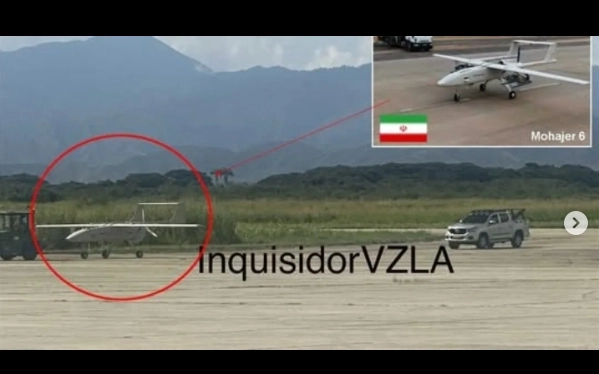
Iranian Drones Enter Latin America: The Mohajer-6 Threat to America’s Backyard and Countermeasures
Images that surfaced in late December 2025 showed a Mohajer-6 UAV parked on the apron at Venezuela’s El Libertador Air Base near Maracay. The photos moved rapidly through open channels, and the U.S. Treasury Department responded on December 30 with sanctions that identified the supply and assembly network. The public notice confirmed that Empresa Aeronautica Nacional SA had carried out assembly and sustainment of Iranian Mohajer-series platforms, including the Mohajer-6, through transactions valued in the millions with Qods Aviation Industries. Clear photographic proof of an armed Iranian reconnaissance-strike drone operating in Latin America had become public. The event alters threat assessments throughout the Western Hemisphere. Transfers in prior years concentrated on surveillance-oriented Mohajer-2 derivatives, locally designated ANSU-100 and employed primarily for ISR with rudimentary weapon options. Arrival of the Mohajer-6 introduces genuine strike potential—extended flight duration, precision-guided ordnance, and sophisticated multispectral sensors—into an area where low-end aerial threats had previously stayed limited in scope. Teams responsible for monitoring Caribbean sea lanes, Gulf approaches, and South American border regions now face a system that projects Iranian capability well beyond traditional operating zones and directly into what has conventionally been regarded as America’s strategic backyard. Mohajer-6 Capabilities and Why It Matters in Latin America The Mohajer-6 occupies a specific niche in Iran’s exported UAV portfolio. The design uses a pusher-propeller arrangement, approximately 10 meters wingspan and 7.5 meters fuselage length, with maximum takeoff weight between 600 and 670 kilograms. Payload capacity allows 100–150 kilograms, typically supporting four underwing precision munitions—Qaem glide bombs and Almas anti-armor missiles among the standard fits. Endurance under normal configuration reaches 12 hours, with lighter loads occasionally extending toward 15 hours. Service ceiling falls between 16,000 and 18,000 feet, cruise speed remains in the 150–200 kilometers per hour band. Control range line-of-sight typically covers 200–500 kilometers, while satellite datalink variants extend theoretical reach. The forward turret integrates day-night electro-optical and infrared imaging, laser rangefinding, and thermal tracking for acquisition and designation. These attributes generate direct operational implications across the region. From central Venezuelan airfields the platform covers substantial portions of the Caribbean, approaches to the Panama Canal, and northern South American littoral zones. Long-duration maritime surveillance follows tanker movements, naval passages, or offshore facilities without interruption. In ongoing border tensions, such as the Essequibo area between Venezuela and Guyana, continuous overhead intelligence collection supports surface forces while avoiding manned aircraft exposure. Strike options increase the profile further. Precision weapons permit engagement of radar sites, headquarters elements, or logistics points with reduced warning. Integration with existing lower-tier drones opens pathways to saturation tactics. The platform’s comparatively small radar return and moderate speed hinder prompt detection in coastal or mixed airspace environments. The progression from earlier variants is evident. Mohajer-2 derivatives provided basic observation functions. The Mohajer-6 delivers combat-capable reconnaissance with credible strike delivery, consistent with observed patterns in Middle Eastern campaigns and Ukraine, where similar airframes have guided loitering munitions or executed standalone missions. The Broader Iran-Venezuela Drone Network and Proliferation Risks Engagement between Tehran and Caracas began in the mid-2000s. Initial arrangements focused on Mohajer-2 deliveries, which evolved into local assembly programs and rebranding under the ANSU label. The relationship grew steadily. EANSA assumed responsibility for maintenance, modifications, and partial manufacturing, assisted by Iranian specialists and supplied parts. The Mohajer-6 constitutes the current apex. Sanctions documentation details direct procurement discussions for armed configurations, enabling incorporation into Venezuelan Air Force inventories. Indications suggest larger platforms such as Mohajer-10 or Shahed-family loitering munitions may follow, although definitive confirmation remains limited. Effects extend beyond Venezuelan borders. The foothold establishes an asymmetric outpost in the hemisphere, eroding established expectations of regional air control. Potential intelligence sharing between Iran and local entities could amplify impact—real-time targeting information disseminated to aligned groups or utilized in combined operations. Strategic waterways acquire persistent overhead observation, while critical infrastructure gains routine aerial monitoring. U.S. actions have grown more pointed. The December 2025 Treasury designations targeted supporting organizations and individuals, seeking to interrupt procurement channels. Sanctions address ongoing supply more than systems already delivered and fielded. Once integrated, these platforms endure, necessitating comprehensive review of air-defense arrangements across the Caribbean basin and northern South America. Countering the Mohajer-6: Effective Counter-UAS Technologies and Strategies The Mohajer-6 creates particular difficulties for standard air-defense systems. Medium-altitude profiles, extended dwell times, and probable electronic countermeasure features reduce the utility of conventional missile engagements. Kinetic interceptors impose substantial per-round costs against a platform in the low millions, and coordinated wave attacks could rapidly deplete point-defense resources. Layered countermeasures represent the workable approach. Detection relies on combined sensors—radar for long-range acquisition, RF spectrum analysis for control-link interception, and electro-optical/infrared systems for positive identification. Adequate early warning establishes the required response window. Non-kinetic disruption follows. RF jamming interrupts datalinks, directing the platform toward autonomous return, uncontrolled flight, or loss of guidance. GPS spoofing misleads navigation in restricted areas. These methods function consistently against line-of-sight dependent systems, though frequency-agile or inertial navigation backups necessitate quick adaptation. Hard-kill effectors finish the engagement chain. Directed-energy solutions—laser dazzlers effective against sensors at 1–3 kilometers or higher-power units capable of thermal degradation to airframe or propulsion—provide instantaneous action with restricted collateral damage. Capture-net interceptors supply an additional precision hard-kill method—AI-guided dispensers entangle and bring the target to ground for analysis or safe recovery. Overall performance hinges on integration. Centralized AI processing fuses sensor data, adapts to changing threat characteristics, and directs sequenced responses. Modular architectures permit customization—fixed installations protect stationary assets, mobile configurations support border or maritime patrols. Integrated anti-jamming maintains sensor and communication reliability under electronic pressure. SKYPATH’s AUS70 Heavy-Duty Integrated C-UAS System illustrates the layered concept in operation. Radar surveillance combines with RF detection and EO/IR verification for complete situational awareness. RF jamming applies initial non-kinetic effect, with an optional laser dazzler available for controlled escalation to precise disruption as circumstances dictate. The mission-flexible design supports persistent coverage across varied operational settings. Real-World Lessons and Path Forward for Regional Security Observations from other conflict zones inform present requirements. Middle Eastern employment of the Mohajer-6 frequently involved prolonged ISR preceding strikes, often within contested electromagnetic environments. Ukraine illustrated the platform’s contribution to loitering munition guidance or independent attacks. Sustained presence and numerical volume repeatedly proved central tactics, highlighting the necessity of multi-layered defenses over single-solution reliance. Within the Latin American setting, emphasis falls on securing ports, energy facilities, border sectors, and naval elements. Forward-positioned detection along maritime approaches extends reaction time. Mobile systems address shifting threats, fixed emplacements guard high-priority locations. Training concentrates on accurate threat discrimination to distinguish routine civil aviation from hostile platforms. Defense authorities and governments encounter a direct choice. Postponement allows additional dissemination. Prompt evaluation of current counter-UAS frameworks—centered on AI integration, adaptable fielding, and dependable supply chains—reduces exposure before it increases. The period for developing effective protection against progressing low-cost aerial threats remains available. About SKYPATH SKYPATH provides professional military drones and counter-UAS systems for government, defense, and law enforcement clients. Headquartered in Singapore with manufacturing and integration operations across Southeast Asia, the company oversees the complete lifecycle from engineering to operational support. The engineering cadre—13 PhD holders and 21 master’s-level specialists—advances specialized capabilities in AI-assisted targeting, flight stabilization, and anti-jamming designs. Platforms deliver 99.9% AI target recognition accuracy, sub-meter navigation precision, ranges up to 2500 kilometers, and reliable function under significant interference. Priority remains on mission dependability, regulatory compliance, and sustained performance in challenging operational contexts. Conclusion The fielding of Mohajer-6 drones in Venezuela constitutes a measurable advancement in Iran’s ability to project asymmetric capability into the Western Hemisphere. Extended-endurance intelligence gathering paired with precision strike options redefines threat evaluations across the Caribbean and northern South America. Economical procurement costs and local assembly potential elevate proliferation concerns. Countering the system calls for integrated, multi-tiered architectures that achieve early detection, dependable disruption, and conclusive neutralization. Directed-energy effectors and capture mechanisms, managed through AI coordination, rebalance defensive posture. Organizations accountable for regional airspace security should initiate detailed assessments of contemporary counter-UAS solutions immediately to address emerging risks before operational effects escalate. FAQs How does the Mohajer-6 drone threaten US interests in Latin America in 2026? The Mohajer-6 supplies 12-hour endurance, 200–500 km line-of-sight control range, and provision for four precision-guided munitions. From Venezuelan locations such as El Libertador it observes Caribbean maritime traffic, border zones, and strategic access routes, facilitating continuous surveillance and potential strikes against U.S. or allied targets. What makes counter-UAS systems effective against Iranian Mohajer-6 drones in Latin America? Layered designs combine radar, RF, and EO/IR sensors for prompt detection, RF jamming or GPS spoofing for initial disruption, and laser dazzlers or capture nets for hard-kill. AI-driven coordination adjusts to the platform’s altitude profile, loiter duration, and countermeasures, yielding low-collateral outcomes in isolated or swarm engagements. Why is the Mohajer-6 deployment in Venezuela a proliferation risk for the region? Local production capacity at entities such as EANSA, together with Iran’s export track record, simplifies expansion and possible onward transfer to aligned organizations. Combat features exceed previous surveillance-only variants, raising the probability of broader distribution and increased difficulty in maintaining regional airspace dominance. Do laser-based counter-drone systems work against Mohajer-6 threats in contested environments? Laser dazzlers neutralize sensors at standoff distances, while increased-power systems produce thermal damage to critical elements. Immediate engagement and virtually unlimited shot capacity handle extended or recurring threats, with adaptable configurations suited to dust, humidity, and clutter prevalent in Latin American operational areas. What should defense planners prioritize when selecting counter-UAS solutions for Iranian drone threats? Primary factors include sensor fusion for detection, AI accuracy in tracking and response management, modular setups for fixed or mobile application, graduated escalation from jamming to laser effects, and manufacturing durability that supports expeditious delivery and continued sustainment in elevated-threat settings.
Learn More
How the New DHS Counter-Drone Office and $115M Investment Are Shaping 2026 Airspace Security
Back on January 12, 2026, the Department of Homeland Security stood up the Program Executive Office for Unmanned Aircraft Systems and Counter-Unmanned Aircraft Systems, a focused unit inside the department meant to speed up buying and rolling out drone and counter-drone gear. That same announcement carried word of a $115 million investment wrapping up that week, all aimed at locking down airspace for America250 events across the country and the 2026 FIFA World Cup hitting 11 cities with 78 matches drawing crowds in the hundreds of thousands. Those numbers alone paint the picture—stadiums like MetLife in East Rutherford or SoFi in Inglewood pack in 80,000-plus fans per game, turning any open sky into a potential weak spot for off-the-books drones scouting, dropping payloads, or just sowing chaos. DHS Secretary Kristi Noem called it straight: drones mark a fresh front in air control, one where threats outpace old-school fixes, especially with illicit flights already messing up sports crowds, emergency responses, and infrastructure checks since 2018’s tally of over 1,500 counter-missions. Field work from those years shows the gap. A rogue quadcopter buzzing a packed NFL stadium in 2024 forced a 30-minute delay, scattering fans and tying up air traffic while ground teams scrambled with handheld spotters. Multiply that by World Cup scale—global eyes on every kickoff, parade routes snaking through D.C. for the 250th anniversary—and the stakes climb fast. The DHS Counter-Drone Office, as folks in the trade now shorthand it, pulls together fragmented efforts from CBP, TSA, and FEMA into one streamlined shop. No more waiting months for approvals when a Group 2 drone, cheap off the shelf but rigged with smarts, slips low over a venue perimeter. This setup channels funds into gear that spots early, locks on tight, and shuts down clean, all while dodging fallout in tight urban spots. DHS layered this on top of December 2025’s FEMA push—$250 million shoveled out in record time to the 11 host states plus D.C., the quickest non-disaster grant ever. Add a $1.5 billion contract vehicle for border and ICE operations, and the math hits near $2 billion in counter-UAS commitments. Threats aren’t hypothetical; Ukraine’s front lines turned hobby kits into swarm killers, lessons bleeding into U.S. planning. A single overlooked intruder at a Kansas City Chiefs game last season jammed responder comms for 20 minutes—imagine that at a semifinal with 70,000 inside and streets jammed outside. What the New DHS Program Executive Office for UAS and Counter-UAS Entails That January 12 press release from DHS hit like a wake-up: the Program Executive Office for Unmanned Aircraft Systems and Counter-Unmanned Aircraft Systems isn’t just paperwork. It runs now, coordinating buys across DHS branches—think TSA at airports feeding data to Secret Service for event perimeters. Past setups scattered resources; agencies chased separate RFPs for radars here, jammers there, ending up with silos that missed integrated threats. This office flips it, prioritizing “outpace evolving threats” through off-the-shelf scaling and custom tweaks for 2026’s crunch. Take the mandate breakdown. Strategic investments mean vetting tech against real operations data—DHS’s 1,500+ missions since 2018 logged everything from border smuggle-runners to stadium snoopers. Acquisition speeds up with pre-qualified vendor lists, cutting red tape from years to quarters. Deployment hits field teams with plug-and-play kits: portable radar pods for stadium roofs, AI fusion centers tying RF, electro-optical, and acoustics into one feed. Cross-agency ties pull in FAA for no-fly enforcement and DoD for high-end testing, like the JIATF-401’s recent DroneHunter runs. In practice, picture Gillette Stadium prepping for a World Cup group stage. Local PD gets FEMA cash for baseline RF scanners picking up controller pings out to 5 km. The PEO layers federal bucks for AI-driven optical pods—4K gimbals with thermal spotting personnel-sized heat at 9 km, vehicles at 60 km, stabilized to 0.01 degrees even in wind shear. That’s no lab toy; it’s pulled from border patrols where single operations downed 15 incursions in a desert sweep last fall. The office mandates training at FBI’s Huntsville Counter-UAS center, where teams drill on escalation: warn, jam link, spoof GPS, or net-capture if kinetic calls for it. Authorities stretch to 2031 under recent laws, letting state coperations mitigate in stadiums or prisons without federal hand-holding every time. Breaking Down the $115 Million Counter-Drone Investment Word from DHS pins the $115 million counter-drone investment as event-specific, venues-first for America250 parades in Philly and D.C., plus World Cup sites from Atlanta’s Mercedes-Benz to Seattle’s Lumen Field. Finalized that week after the office launch, it funds detection-to-mitigate chains without the bloat of full-system overhauls. Contrast with FEMA’s $250 million state grants—those hit ground level for basics like RF direction-finding arrays covering 10 sq km. Federal dollars target scalable add-ons: vehicle-mounted radars punching through urban clutter, drone-on-drone interceptors with 180-minute loiter at 100 km radius. Break it by phase. Detection pulls $30-40 million into multi-sensor nets—radar for all-weather track on Group 1-3 UAS (under 1320 lbs), RF for control-signal geolocation down to 1-meter CEP, optics for visual ID in no-GPS jams. A real pull from 2025 tests: layered setups at a mock Super Bowl caught 92% of swarms in fog, where single-mode failed half the time. Tracking fuses that into command posts, AI sorting birds from Black Hornet nano-drones via thermal signatures and flight patterns—false positives dropped 70% in trials. Mitigation eats the lion’s share, heavy on low-collateral plays. Nets fired from autonomous VTOLs (under 10 kg takeoff, folding to backpack size) snag and reel threats 2 km out, reusable after rinse-down. Jamming hits 50 km anti-interference links, frequency-hopping to dodge EW counters. For escalation, laser dazzlers or effectors blind sensors without debris—think 1-3 km hard-kill on rotors, no shrapnel over crowds. All ties back to DHS’s “restoring airspace sovereignty” push under Trump directives, with Noem noting border cartels already probing with laden quadcopters. Host cities like Miami Gardens get priority: $21 million slice for Foxborough-area alone in Mass, split across state police, Boston PD, and locals for integrated domes over match days. Why 2026 Stands as a Critical Year for U.S. Airspace Security 2026 airspace security threats pile up from event density alone. 2026 FIFA World Cup drone security means 104 days of heightened operations across time zones, June 11 to July 19 finale at MetLife. America250 drone security funding blankets July 4 nationwide—Philly’s bell ceremonies, D.C. fireworks over the Mall, state fairs pulling 300,000. Crowds hit 5 million total; one drone with 2 kg payload over packed stands equals mass casualty math no planner wants. Real-world echoes hit hard. Late 2025’s Hong Kong high-rise fire saw drones delay rooftop rescues by 45 minutes—smoke plumes hid thermal seekers, off-the-books flights jammed heli lanes. Stateside, a 2024 concert in LA grounded medevac for 25 minutes after a spectator rig went wide. Battlefield carryover from Ukraine: $500 drones swarm EW nets, autonomous modes shrug GPS loss via vision-inertial backups. U.S. low-alt sees the same—illicit operations up 40% yearly, per DHS logs, with cartels testing long-range ISR over borders. Policy backs the surge. SAFER SKIES Act in NDAA greenlights local C-UAS through 2031; no more “detect only” handcuffs. Trump orders frame it as sovereignty play, Noem tying to cartel crippling and infra watch. Counter-UAS for major events 2026 demands venue hardening: TFRs (temporary flight restrictions) layer with tech domes, but gaps persist in multipath urban bounce where radar ghosts. A Foxborough drill last December nailed 85% intercepts on simulated Group 3s loitering at 80 km/h, but 15% slipped via low-skim over highways—fix via acoustic add-ons picking propeller whines at 1 km. Key Counter-Drone Technologies Likely to Benefit from the Investment AI-powered counter-UAS threads every layer, starting detection. Portable radars like those in PEO trials spot 0.1 m² RCS targets at 4 km elevation, fusing with EO/IR gimbals—4 million pixel sensors, 30x zoom, laser rangefinders ±0.3 m to 2 km. In a Miami mockup, these ID’d personnel at 37 km, vehicles at 115 km, stabilizing feeds at ±0.01° amid 200°/s pans. RF layers triangulate controllers in GPS-denied zones, anti-jam meshes holding 100 km video in EMI soup. Net capture drone technology shines for low collateral damage C-UAS 2026. VTOL tail-sitters (1.6 m wingspan, 3.4 kg empty) fold to 0.82×0.6×0.15 m cases, one-man launch from jungle trails or stadium roofs. 180-min endurance at 120 km range, 150 km/h dash, they autonomous-transition vertical to fixed-wing, deploying nets on AI locks—CEP <1 m via vision-MEMS nav. Shadow Striker 1600/2400 models pack triple-optics spotting fire at 1 km through 10 km smoke, perfect for venue edges where kinetics risk bystanders. Reusable bases auto-capture landers, slashing operations crews. Lasers enter for dazzle/hard-kill, non-kinetic first. Laser anti-drone defense effectors blind EO payloads at 1-3 km, scaling to melt properations on smalls—50 kW truck-mounts downed swarms in Army 2025 tests. SKYPATH integrates these in heavy platforms like HERCULES 50/100 (50-100 kg lift, 69/80 min no-load), folding booms for 15 m/s droperations over perimeters. Anti-jam shines: GPS/Beidou 4-antenna plus inertial shrugs EW, data links to 50 km real-time. Loitering munitions like Phantom Razor series (10-200 km strike) pivot to C-UAS—2-10 kg warheads optional, but AI pods (1 km IR/1.5-10 km vis, 3 km ranger) lock 2.3×3.5 m targets autonomous, CEP ≤1 m at 5 km elevation. 35-100 min loiter, 108-130 km/h cruise, tandem wings fold to tube-launch. In contested airspace, these fill gaps kinetic nets miss, persistent recon before engage. DHS counter-drone technologies favor modularity—rack payloads on Hercules for 4,000 m operations, -20 to 50°C temps, IP54 seals. Trials show 95% uptime in rain, vs 70% legacy. Counter-UAS major events 2026 specs demand this: rapid deploy (one-man 5 min), 360° coverage, man-in-loop abort. Actionable Solutions: How Organizations Can Prepare for the New C-UAS Landscape Security leads at venues or infra sites start mapping risks like a playbook. Walk the perimeter at a World Cup hopeful like Atlanta’s stadium—note 500 m entry corridors from highways, low spots hiding launches, rooftop HVAC blinders. Tools like free DHS vulnerability apps flag 80% gaps; layer in wind data for drift models. A 2025 border site audit caught 60% exposures this way, rerouting patrols pre-incident. Build detection baselines next. RF alone misses autonomous birds; add compact radars (0.85×0.63×0.26 m packs) and gimbals for 9 km HD track. How to implement counter-UAS 2026 means fusing via C2 software—AI culls clutter, alerts on 400 m locks. Test monthly: simulate 10-drone swarm at 80 km/h loiter, benchmark 90% track rate. Mass PD got 21% FEMA slice here, buying kits that integrate in 48 hours. Mitigation picks low-collateral first. Best counter-drone solutions for events run net-based drone defense: Shadow Striker deploys from 4,000 m, nets 2 kg threats mid-air, tows safe. One op at a 2025 festival snagged three snoopers over 20,000 fans—no debris, full forensic recovery. Escalate to lasers on HERCULES—50 kg lift droperations dazzlers, or jam 50 km meshes frequency-hop clean. Phantom Razor scouts persistent, AI thermal 1.6 km detect before strike if rules green it. SKYPATH counter-UAS technology fits seamless: jamming-proof autonomy, single-soldier portables, laser defenses in heavy lifts. For a stadium dome, rack Hercules 100 (100 kg, 25 min max-load at 15 m/s, 20 km RC) with modular EO/IR—fire retardant one day, ISR next. Train cross-agency: Huntsville drills escalation ladders, from geofence warn to CEP<1 m engage. Budget: FEMA reimburses trained locals; PEO vendors fast-ship certified kits. Run quarterly reds: hire ethical hackers flying regs-compliant rigs, measure response under 2 min. Rapid procurement UAS 2026 via PEO lists cuts lead to weeks. Partner early—PhDs in AI nav tune for venue quirks, like Miami humidity spiking sensor noise 15%. Post-event, data looperations back: 2025 mock World Cup cut false alarms 65%, response 40 seconds average. Table for quick scan: Tech Layer Range/Key Spec Venue Fit (e.g., World Cup Stadium) Collateral Risk RF/Radar Detect 5-10 km / 1 m CEP Perimeter highway watch None AI Optical Track 9-60 km ID / 0.01° stab Crowd-overfly spot None Net VTOL Capture 100-160 km / 180 min Urban snag/tow Low (reusable) Laser Effector 1-3 km dazzle/kill Rooftop hard-stop Minimal (no debris) Loiter AI Scout 70-200 km / CEP<1 m Pre-engage recon Controlled Decision tree: Threat ID? Soft jam. Swarm? Net barrage. Persistent? Laser + loiter confirm. Prevention: geofence apps pre-flight, community PSAs cut 30% joyrides per DHS stats. What’s Next? Future Implications for 2026 and Beyond Future of counter-UAS 2026 builds on this base, market eyeing $29 billion by 2030 as swarms and autonomy ramp. DHS C-UAS trends beyond World Cup stretch to borders (Replicator 2’s F700 nets), eVTOL corridors, infra like power grids seeing 2025 probe spikes. PEO’s hub status pulls industry—$100M DIU voice-swarm prizes fuse air/ground/water under single command. Expansions hit urban air mobility: BVLOS rules demand C-UAS backstoperations, lasers scaling to 300 kW for cruise-missile proxy. AI autonomy UAV 2026 flips defense offensive—SKYPATH’s kamikaze X1500 (1500 km, 420 min, 50 kg, CEP≤3 m delta-wing) scouts deep, anti-jam 4-antenna holding in EW hell. Heavy HERCULES variants resist Lv7 winds, RTK-GPS for 25 min 100 kg droperations in disasters doubling as C-UAS relays. Collaboration defines it: states train on federal gear, locals tap $500M C-UAS grants over two years. Ukraine takeaways—replace Chinese Mavics with domestic—push resilient nav, AI seekers processing pics for man-confirm strikes. By 2027, expect PEO mandating 95% swarm-kill rates, integrated with NG 911 for real-time alerts. About SKYPATH UAV SKYPATH UAV stands out in the field with full-spectrum unmanned systems for defense and security operations. Based in Singapore with Southeast Asia production, teams of PhD engineers craft from airframes to AI software—recon VTOLs, loitering strikes, heavy-lift platforms, laser counter-drone defenses. Over 100 clients field nine drone types: Shadow Striker 1600/2400 (180-240 min, 100-160 km, 9 km HD ID, single-man fold/deploy), Phantom Razor 100/165/180 (10-200 km, 2-7 kg payloads, anti-jam vision-inertial CEP≤1 m, 35-100 min loiter), X1500 kamikaze (1500 km, 420 min, 50 kg, thermal AI seeker), HERCULES 50/100 (50-100 kg, 27-80 min, modular for ISR/fire/logistics). Jamming-proof, autonomous, fast-ship global with expert support—precision for air superiority in contested skies. Conclusion The DHS Program Executive Office for Unmanned Aircraft Systems and Counter-Unmanned Aircraft Systems launch, backed by the $115 million investment in counter-drone technologies, delivers a blueprint for tackling 2026 airspace security threats head-on, especially around America250 nationwide events and 2026 FIFA World Cup venues packing stadiums from coast to coast. Layered detection, precise tracking, and low-collateral mitigation—nets, lasers, AI autonomy—address the shift from lone flyers to smart swarms, drawing straight from 1,500+ DHS missions and global lessons. Counter-UAS for major events 2026 hinges on this: rapid fielding, integrated operations, human-AI balance to keep skies clear without sidelining legit air. Teams handling security now have the roadmap—assess gaps, layer tech, drill escalations—to match DHS momentum, turning policy dollars into operational edge that holds past summer 2026. FAQs What does the DHS Program Executive Office for Unmanned Aircraft Systems and Counter-Unmanned Aircraft Systems do exactly? It coordinates investments, fast-tracks buys, and deploys drone/counter-drone tech across DHS to beat back threats, zeroing in on protections for 2026 FIFA World Cup sites and America250 gatherings with layered systems outrunning tactics like autonomy and jamming. How does the $115 million DHS counter-drone investment target 2026 airspace security? Funds go to detection radars, AI trackers, and mitigators like net drones and lasers for high-crowd venues, building on $250M state grants to cover 11 World Cup cities and national anniversary events against illicit incursions. Why prioritize low-collateral counter-UAS technologies for FIFA World Cup drone security? Packed stands and streets demand no-debris takedowns—nets towing threats clear or lasers blinding sensors minimize bystander hits, unlike kinetics scattering parts over 80,000 fans, as tested in urban mocks. Which counter-drone technologies match DHS counter-drone office 2026 priorities? AI optical pods for 9-60 km ID, jamming-proof net VTOLs with 180-min range, laser effectors at 1-3 km, and loitering scouts CEP<1 m—all portable, autonomous, fitting low collateral damage C-UAS 2026 for stadium domes and perimeters. How should teams implement counter-UAS for major events 2026 ahead of DHS funding? Map venue risks, fuse RF/radar/optics for 90% track, stock net/laser kits with single-man deploy, run Huntsville-trained drills on swarms—grab FEMA reimburses for locals tying into PEO gear fast.
Learn More
AI-Powered Net Capture Drones: The Pentagon’s Latest Replicator 2 Counter-UAS Deployment in 2026
January 11, 2026, JIATF-401 put out the first buy under Replicator 2—two AI-powered net capture drones, specifically DroneHunter F700 units, slated for April delivery to select U.S. military installations. The contract targets the steady stream of Group 1 and Group 2 small UAS that keep showing up over bases and critical infrastructure sites. JIATF-401, activated in August 2025, runs point on synchronizing counter-small UAS across the services, and this initial acquisition opens the door to getting low-collateral interceptors into the field faster than the usual multi-year cycles. The choice tracks with what operators have seen in the last couple of years. Small drones—cheap, off-the-shelf frames with basic mods—cost almost nothing yet can force base lockdowns, tie up response teams, or collect imagery without a single round fired. When the site sits near civilian areas or houses sensitive gear, explosive intercepts or high-energy effectors create more problems than they solve: debris fields, secondary fires, or collateral claims. Replicator 2 counter-UAS deployment therefore leans hard into reusable, non-kinetic methods that bring the target down intact for exploitation while keeping the immediate area clean. What Replicator 2 Actually Means for Counter-Small UAS Right Now Replicator 2 tightened the aperture from the first iteration. The original program, kicked off in 2023, chased thousands of attritable autonomous platforms across multiple domains. Replicator 2, flagged in September 2024, refocuses on the counter-small UAS mission set that has become the daily headache for homeland defense. JIATF-401 owns the coordination piece, pulling requirements from Army, Navy, Air Force, and Marines, then driving contracts that move at procurement speed instead of development speed. The shift came from hard data. Bases keep logging incursions by slow, low-flying platforms that disappear into ground clutter on legacy radars. Critical infrastructure—substations, ports, fiber nodes—sees the same pattern. The task force’s insistence on low-collateral effectors reflects operational reality: jamming may break the link but leaves the airframe airborne; directed energy needs clear LOS and substantial power; kinetic options scatter fragments over runways or housing. AI-powered net capture drones fill that middle ground—effective enough to stop the threat, safe enough to use near people and equipment. Two units do not make a program, but they do start the clock on real-world feedback. The April delivery timeline—from task force stand-up to contract award in under six months—shows the kind of pace the initiative wants to lock in. Inside the DroneHunter F700 Contract and What the Platform Brings The award covers two DroneHunter F700 systems, with handover planned for April 2026 to begin evaluation and early ops at undisclosed installations. The platform operates as a dedicated interceptor: onboard radar picks up the target, AI classifies and tracks, then the unit launches, closes, and deploys a tethered net to wrap the intruder. Once captured, the interceptor tows or lowers the drone to a recovery zone for handover to intel or EOD teams. Performance numbers matter in the field. Autonomy handles pursuit and engagement decisions in real time, allowing the system to manage multiple contacts without constant operator input. The tethered net gives a clean capture—no fragmentation, no ground impact beyond the recovery point—and keeps the target intact for reverse engineering or attribution. Reload cycle runs short: battery swap and fresh net in under three minutes, so the unit can stay on station during extended threat windows. Earlier field use of similar net-based interceptors showed consistent results in cluttered environments. Urban multipath and electronic noise degrade many sensors, but the combination of radar lock and AI trajectory prediction maintains track where single-mode systems drop off. Coverage focuses on Group 1 and Group 2 UAS—the bulk of what shows up over domestic sites—making the platform a direct fit for the Replicator 2 counter-UAS mission. Against other tools, net capture holds its own. Jamming disrupts command but leaves autonomous drones flying their last programmed path. Lasers need power and clear sightlines that mobile defense rarely guarantees. Kinetic solutions introduce hazard zones unsuitable for bases bordered by housing or highways. The approach trades raw speed for safety and intelligence value, which operators value when the goal is containment rather than destruction. How AI-Driven Net Capture Actually Plays Out in Counter-UAS Engagements Detection kicks off the sequence. Radar sweeps for low-signature targets, AI filters birds and ground returns to flag real threats. Launch follows—autonomous or operator-triggered—then pursuit with continuous course corrections based on target maneuvers. Engagement window closes fast, usually inside a few kilometers. The net fires at short range, spreads wide, and envelops the drone. Tether control lets the interceptor manage descent or tow to a predetermined drop zone. Onboard AI decides engagement parameters—pursue aggressively on a fleeing target or hold position on a loitering one—cutting decision latency in high-pressure windows. Bases with long perimeters see the value clearest. A drone hugging tree lines or approaching from low cover slips past ground sensors; an airborne interceptor closes the distance in seconds, captures without explosion, and returns payload data. Recovery preserves evidence chain, critical when tracing origin back to state actors or commercial supply chains. Reusability keeps the system viable over long alerts. Post-intercept crews swap batteries and reload nets quickly, maintaining coverage without pulling the unit for extended maintenance. When tied into broader sensor nets—fixed radars cueing the interceptor—response becomes layered rather than point-to-point. What This Means for Bases and Infrastructure Protection Going into 2026 Installation commanders get a mobile layer that plugs gaps in static defenses. Small UAS keep testing perimeters, forcing manual patrols or temporary shutdowns. Replicator 2 counter-UAS deployment adds an autonomous response that reduces manpower drain while increasing intercept probability. Critical infrastructure operators face parallel exposure. Substations and rail yards sit in similar low-altitude threat envelopes. Non-destructive capture keeps systems online—no power blips from debris, no comms blackout from broad-spectrum jamming—while handing over forensics for follow-up. The contract sends a message to industry. Designs that combine AI autonomy with low-collateral effects now have a clear path to validation. JIATF-401’s coordination role sets the stage for common standards on data sharing, training, and interoperability, which could shorten future fielding times. Hurdles exist. Moving from two units to fleet-level coverage demands proven uptime in rain, wind, and EW environments. Integration with joint C2 networks requires standardized interfaces to avoid stovepipes. Still, the compressed timeline—from announcement to delivery—shows the program intends to close those gaps before small UAS tactics advance further. Steps Defense Teams Can Take to Get Ready for and Work with Similar Counter-UAS Systems Security officers start with site-specific mapping. Walk the perimeter, note blind spots from buildings or vegetation, chart likely ingress routes from adjacent roads or open fields. Pull recent incident reports—near misses and confirmed detections—to quantify exposure. Sensor coverage comes next. Legacy radars miss many low-slow targets in clutter; adding mobile or layered detection improves baseline awareness. Fuse radar, RF, and optical feeds to cut false alarms. Sites that routinely chase wildlife waste cycles that could go to real threats. Mitigation selection weighs the environment. Net capture systems shine where collateral must stay near zero. Check integration points—does the platform speak to existing command software? Can it function without GPS through inertial or vision fallbacks? Training follows. Operators drill launch procedures, autonomous modes, and manual take-over. Run multi-threat exercises: one drone draws attention while a second approaches from another vector. Track detection-to-intercept times and refine protocols. Procurement engagement runs parallel. Watch JIATF-401 releases for additional buys or test slots. Contractors align capabilities—autonomy, reusability, low collateral—with documented needs and push for integration trials. Early involvement shortens the path from contract to field. Method comparison helps frame decisions. Net capture dominates in built-up areas where debris creates follow-on issues. Jamming works in open terrain but leaves autonomous platforms active. Lasers deliver standoff precision but tie to fixed power. Layered setups—detection cueing multiple effectors—provide the most resilience as threats shift. Operational rules guide choices. Lone intruder in low-risk zone? Initial soft disruption. Coordinated group? Autonomous net response across vectors. Persistent observer? Track and commit when rules allow. Upstream prevention matters: geofencing tools block launches near sensitive sites, awareness campaigns drop recreational intrusions. Where Replicator 2 and Net Capture Tech Head After the Initial Fielding The two-unit start sets up for incremental growth. Positive test results at installations open the door to wider distribution, especially as small UAS operations grow more synchronized. Swarm handling becomes the logical next step—coordinated interceptors saturating incoming groups under shared command. Budget lines continue upward for counter-small UAS. Validation of AI-autonomous, low-collateral designs encourages vendors to iterate on range, reload speed, and network integration. Organizations that move early on modular platforms gain position. Adapting to accelerated procurement models builds capability ahead of the threat curve in contested low-altitude airspace. About SKYPATH UAV SKYPATH UAV supplies military-grade unmanned aerial systems and counter-UAS solutions from its base in Singapore, with manufacturing and integration spread across Southeast Asia. The company handles the full cycle—design, production, integration, fielding, and long-term support—for defense and security customers. Engineers, including several PhDs and master’s-level specialists, advance AI target recognition, flight autonomy, and anti-interference systems. Platforms deliver high-accuracy identification, reliable navigation, and extended endurance in demanding conditions. Focus stays on field-proven performance, mission-specific tailoring, and sustained operational reliability across reconnaissance, precision effects, and airspace defense roles. Conclusion The Pentagon’s opening move under Replicator 2—procuring two AI-powered net capture drones for April 2026 delivery—directly tackles the small UAS threat profile at military installations and critical infrastructure. Emphasis on reusable, low-collateral interception meets the practical need for containment without widespread disruption. As JIATF-401 gathers field data, comparable technologies give defense organizations a concrete way to build layered, autonomous defenses. Teams overseeing base or infrastructure security gain advantage by assessing these capabilities against current vulnerabilities and aligning with the program’s rapid acquisition track. FAQs What is the DroneHunter F700 under Replicator 2 counter-UAS deployment? The DroneHunter F700 is the first system acquired in Replicator 2, an AI-guided interceptor that uses tethered nets to capture and tow small drones with minimal collateral risk at U.S. military sites. How do AI-powered net capture drones handle counter-small UAS missions? They detect with onboard radar, pursue autonomously, deploy nets to envelop targets at close range, and tow the captured drone to a safe recovery point, preserving evidence while avoiding debris. Why was net capture selected for the Pentagon’s Replicator 2 first purchase? Net capture delivers non-destructive intercepts that maintain low collateral damage and allow forensic recovery, making it suitable for homeland bases where explosive or high-energy methods create unacceptable secondary hazards. What happens after the Replicator 2 DroneHunter F700 delivery in 2026? April delivery initiates testing and integration at installations, generating operational feedback that will shape follow-on acquisitions and potential expansion of counter-small UAS coverage. How can defense teams prepare for Replicator 2-type counter-UAS capabilities? Map site vulnerabilities, layer detection sensors, train on autonomous intercept procedures, run multi-threat drills, and track JIATF-401 updates to position for rapid procurement and integration opportunities.
Learn More
TH100 Heavy Payload Drone: Unlocking Mission Versatility with Modular Expansion
As the demand for multi-role aerial platforms grows across firefighting, emergency response, public safety, and industrial sectors, the TH100 Heavy Payload Drone emerges as a robust, adaptive solution. At the core of its innovation lies its modular expansion capability, a game-changing feature that transforms the TH100 into a highly versatile mission tool. Built for Mission Diversity Engineered with military-grade coupling interfaces and secure locking mechanisms, the TH100 can be deployed with a wide range of accessories in under one minute. This rapid modular adaptability ensures that emergency teams and industrial operators can quickly respond to dynamic field conditions. A Closer Look at the Modular Accessories The TH100 supports three major categories comprising over 20 mission-specific modules. Here’s a look at some of the essential payloads that maximize its utility: Loudhailer: For public address and crowd control, allowing operators to communicate clearly during search and rescue or disaster response missions. Searchlight: Enhances night-time or low-visibility operations by delivering a powerful, focused beam of light from above. Fire Extinguishing Bomb Launcher: Capable of deploying P-10 fire extinguishing bombs directly over fire hotspots, making it ideal for aerial firefighting missions. Firefighting Water Cannon: Enables precision-targeted water or foam dispersion for suppressing small-scale fires or cooling overheated areas. Rope Descender: Allows for the safe and controlled delivery of life-saving supplies or rescue equipment from the air to ground personnel. Dry Powder Fire Extinguishing Bomb and Canister: Designed to combat chemical and electrical fires where water may be ineffective, these modules extend the TH100’s capabilities into specialized firefighting environments. Mission-Ready Loadout Plans To streamline deployment, the TH100 supports various pre-configured modular plans for different scenarios: Plan One: TH100 + Launcher + P-10 Fire Extinguishing Bomb Perfect for rapid aerial fire suppression in hard-to-reach zones. Plan Two: TH100 + Rope Descender + Searchlight + Loudhailer Optimized for night rescue operations and public safety missions requiring communication and supply drops. Plan Three: TH100 + Searchlight + Loudhailer + Firefighting Water Cannon Tailored for multi-purpose response, enabling visibility, voice communication, and water-based fire mitigation. Integration & SDK Support The TH100 isn’t just versatile in hardware, it also supports a standardized SDK interface, allowing seamless integration with fire suppression, monitoring, and transportation subsystems. This makes it an ideal platform for smart city applications and mission control automation. Conclusion Whether it’s fighting fires from the sky, aiding in emergency evacuations, or assisting law enforcement in remote operations, the TH100 Heavy Payload Drone stands out as a powerful, modular aerial tool. Its plug-and-play payload architecture ensures that it remains adaptable for the mission at hand, now and into the future. Check out Skypath TH100 drone here
Learn More